
Installing a new water main is an important part of many construction and property development projects, but it involves much more than laying a new pipe underground.
For a new housing development, commercial site or property extension, the water infrastructure needs to be carefully planned around the existing network, other underground utilities and the final layout of the site. Choosing the right installation method and contractor can also help prevent unnecessary disruption and delays further down the line.
For property owners, the situation can be slightly different. You may need a new water main because an existing supply is unsuitable, a property is being redeveloped, or there is no adequate connection available. In other cases, what appears to be a water main problem may actually require a water supply pipe replacement instead.
This guide explains how water main installation works, when a new main may be required, what developers need to consider and how the installation process works from initial planning through to connection.
What Is a Water Main?
A water main is a pipe that forms part of the wider water distribution network. It carries treated water through an area and provides the infrastructure from which individual properties or developments can receive their supply.
A property is generally connected to the water main through a service or supply pipe. This means that a water main and a water supply pipe perform different roles, even though the terms are sometimes used interchangeably.
For example, a single house with an old underground supply pipe may only require the existing pipe to be replaced. A new housing development, on the other hand, may require a new water main to serve several properties before individual connections can be made.
Understanding this distinction is important when planning work because the required application, design and installation process can vary depending on the type of infrastructure involved.
When Do You Need a New Water Main?
A new water main isn't necessary for every project. If an appropriate existing main is already available, it may be possible to create a new water connection without installing a completely new section of main.
However, a new water main may be required when a development cannot be adequately served by the existing network. This is common on larger residential developments, new roads and sites where there is no suitable water main close enough to provide the required supply.
It can also become necessary where existing infrastructure needs to be altered as part of redevelopment work or where the proposed development requires additional water infrastructure.
The requirements should ideally be established before construction begins. Finding out halfway through a project that a new main, additional connection or alternative route is needed can create avoidable delays.
For developers, this makes early water infrastructure planning an important part of the overall development process.
Water Main Installation for New Developments
New developments often have more complicated water requirements than individual properties.
A site may need a new water main running through several plots, with individual service connections branching from the main to each property. The proposed route also needs to work alongside roads, drainage, electricity, gas, telecommunications and other underground services.
This means water mains installation should be considered alongside the wider site layout rather than treated as a separate job.
The position of buildings, roads and other utilities can all influence where the new main can be installed. Ground conditions and site access may also affect which installation method is most appropriate.
Planning this work early gives developers more opportunity to identify potential conflicts and make adjustments before construction has progressed too far.
How Does Water Main Installation Work?
The installation process will vary depending on the size and nature of the project, but it generally begins with an assessment of the existing water network and the proposed development.
The water industry specialists needs to understand where the existing water main is located, where the new infrastructure needs to go and how individual properties will ultimately be connected.
Once the proposed arrangement has been established, the water main can be designed and the necessary applications and approvals progressed.
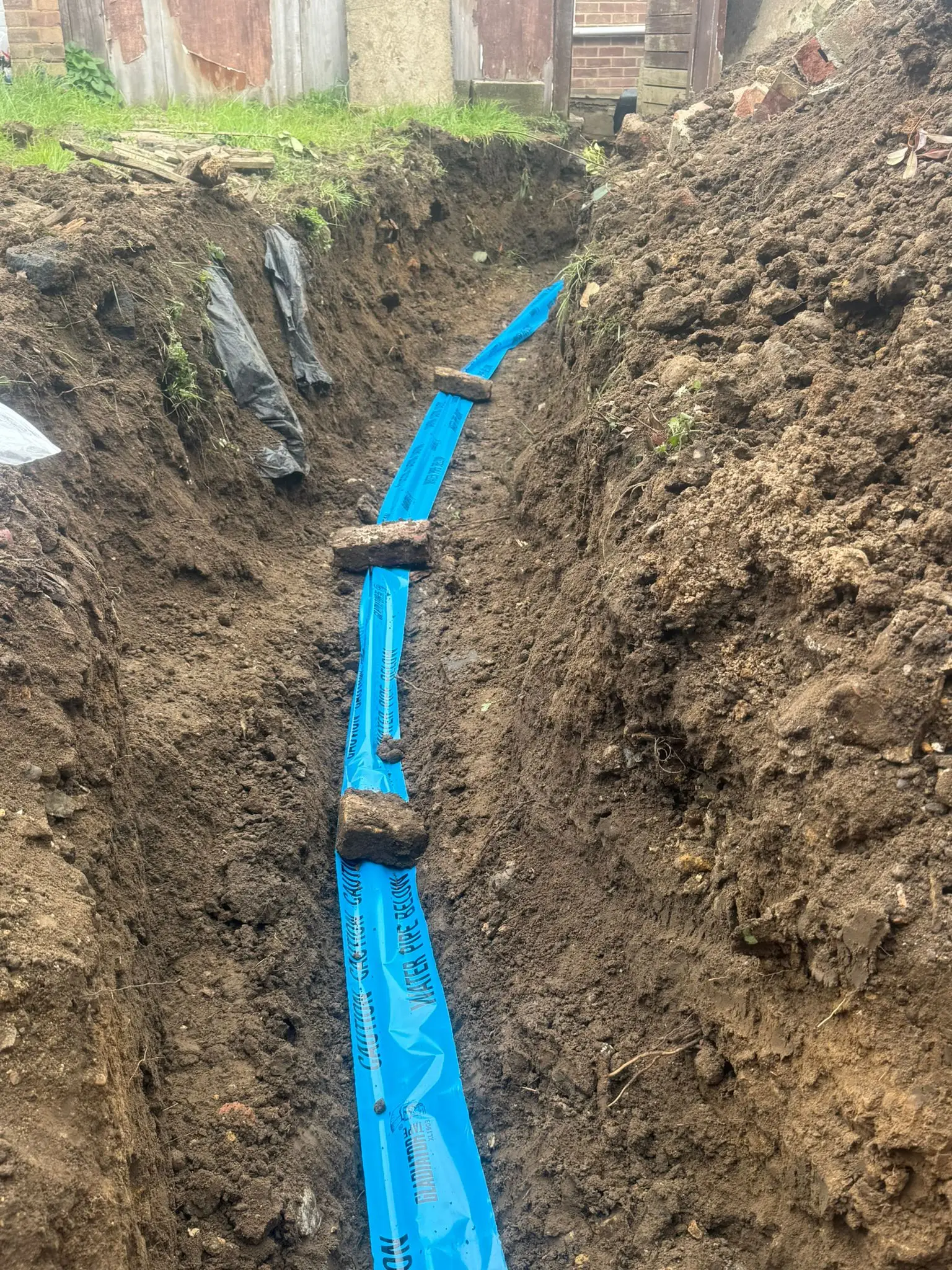
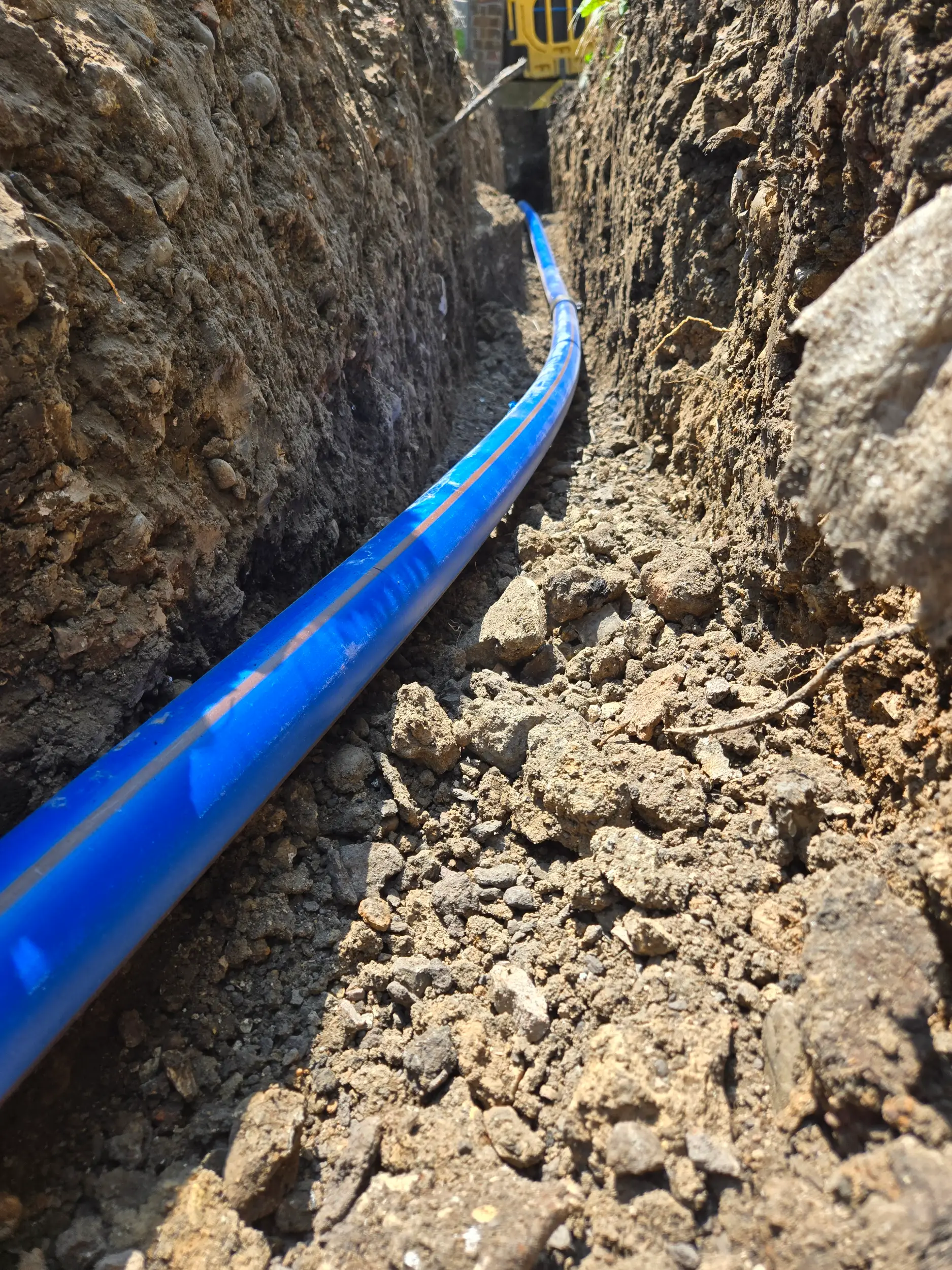
The physical installation may involve excavating a trench along the proposed route. The ground is opened, prepared and the water main is installed before the excavation is backfilled and the affected surface is reinstated.
Traditional excavation isn't suitable for every location, however. Where digging would cause considerable disruption, a trenchless method such as impact moling may provide an alternative.
Can a Water Main Be Installed Without Digging?
In some circumstances, yes.
Traditional water mains installation can involve significant excavation, particularly where the pipe needs to cross a driveway, road, landscaped area or other established surface.
Impact moling is a trenchless installation technique that can allow underground pipework to be installed with considerably less surface excavation. A specialist moling system creates an underground passage through which the new pipe can be installed.
This can be particularly useful where minimising disruption is important.
However, moling isn't automatically suitable for every project. Ground conditions, the proposed route, existing underground services and access all need to be assessed before deciding whether trenchless installation is appropriate.
The objective isn't simply to choose the least disruptive method. It's to find an installation approach that is practical, safe and suitable for the site.
What Is a Self-Lay Water Main?
Developers may also have the option of using a self-lay water mains contractor.
Self-lay allows an approved independent contractor, known as a Self-Lay Provider or SLP, to carry out eligible water infrastructure works on behalf of the developer rather than having the water company undertake the installation directly.
This can give developers greater control over the construction programme and can make it easier to coordinate water infrastructure with other work taking place on the site.
Once the infrastructure has been installed and meets the required standards, it can be adopted by the relevant water company where the appropriate adoption arrangements are in place.
For developers managing a larger project, self-lay can therefore be an important option to consider during the early planning stages.
Cascade Water Services provides self-lay and NAV services for development projects, supporting clients with water infrastructure requirements from planning through to installation.
Self-Lay Water Mains vs Water Company Installation
Choosing between a water company installation and a self-lay approach will depend on the project, the site and the requirements of the relevant water company.
Self-lay can be attractive to developers who want to coordinate the water infrastructure with their own construction programme. It can also provide access to a specialist contractor that understands the practical requirements of development sites.
For larger projects, coordination is particularly important. Water infrastructure often needs to be installed alongside roads, drainage and other utilities, so having a contractor involved who understands the wider construction environment can make the process easier to manage.
The best option should be assessed on a project-by-project basis rather than assuming that one approach will always be more suitable.
What Happens After the New Water Main Is Installed?
Installing the pipe is not the final stage of the project.
The completed water main needs to go through the required testing and commissioning process before it can be put into service. Depending on the project, this can include pressure testing, disinfection, water quality sampling and inspection.
The relevant documentation also needs to be completed. For self-lay projects, this may include test certificates, as-laid drawings and other information required by the water company.
Once the necessary requirements have been met, the new infrastructure can be connected and brought into operation.
For developments, this stage is particularly important because individual properties may depend on the new main being successfully commissioned before their own water connections can be completed.
What Should Developers Consider Before Installing a Water Main?
The earlier developers investigate their water requirements, the easier it is to coordinate the work with the rest of the construction programme.
The first consideration is the existing water network. Understanding where the nearest suitable main is located and whether it has sufficient capacity can help establish how the development should be supplied.
The proposed route of the new main is equally important. It needs to work with the final site layout while avoiding conflicts with other underground infrastructure.
Developers should also consider whether a self-lay arrangement is suitable, what approvals will be required and how the installation will fit into the wider construction schedule.
The physical work is only one part of the process. Allowing time for design, applications, approvals, testing and commissioning can help prevent water infrastructure from becoming a last-minute obstacle to completing the development.
Why Choose a Specialist Water Mains Contractor?
The earlier developers investigate their water requirements, the easier it is to coordinate the work with the rest of the construction programme.
The first consideration is the existing water network. Understanding where the nearest suitable main is located and whether it has sufficient capacity can help establish how the development should be supplied.
The proposed route of the new main is equally important. It needs to work with the final site layout while avoiding conflicts with other underground infrastructure.
Developers should also consider whether a self-lay arrangement is suitable, what approvals will be required and how the installation will fit into the wider construction schedule.
The physical work is only one part of the process. Allowing time for design, applications, approvals, testing and commissioning can help prevent water infrastructure from becoming a last-minute obstacle to completing the development.
Planning a New Water Main?
Whether you're developing a new site, adding properties to an existing development or dealing with water infrastructure issues at an individual property, getting the right advice early can make the entire process easier to manage.
Cascade Water Services provides water mains installation, water connections, self-lay and NAV, supply pipe replacement and trenchless moling services for property owners, developers and commercial clients.
If you're planning a new development or need to establish the best way to connect your property to the water network, contact Cascade Water Services to discuss your requirements and arrange a site assessment.
Frequently Asked Questions
Bringing years of expertise & experience to the areas of Bedfordshire & Hertfordshire.