Supply pipe repair, replacement and installation

The supply pipe runs from the point where it crosses the public–private boundary into your building — and it is the responsibility of the property it supplies, not the water company’s. We find what has failed, fix or renew it, and put the ground back properly.

Supply pipe problem?Not sure what you need? Send a few photos and we will advise on the options.

The service

A supply pipe fails quietly, then all at once.

Most private supply pipes in London, the South East and the East of England were laid decades ago, in lead, galvanised steel or early polythene. They do not fail overnight. Pressure drops a little each year, a bill creeps up, a patch of lawn stays green through a dry August — and then a joint lets go under a driveway on a Friday afternoon.

Cascade has worked on private water supply pipework for over thirty years. We treat it as infrastructure rather than plumbing: locate the defect acoustically before anything is dug, decide honestly whether a repair or a full renewal is the better answer, and install in modern blue MDPE to the Water Supply (Water Fittings) Regulations. Where ground conditions allow we mole the new pipe in underground, so driveways, lawns and forecourts are never opened at all.

The same team covers a single terraced house in Islington and a commercial site on a large-bore connection. What does not change is the sequence — evidence, then excavation.

What we do

Three stages, and the first one is not digging.

The expensive part of supply pipe work is the ground, not the pipe. Every stage below exists to make the excavation smaller — or to remove it entirely.

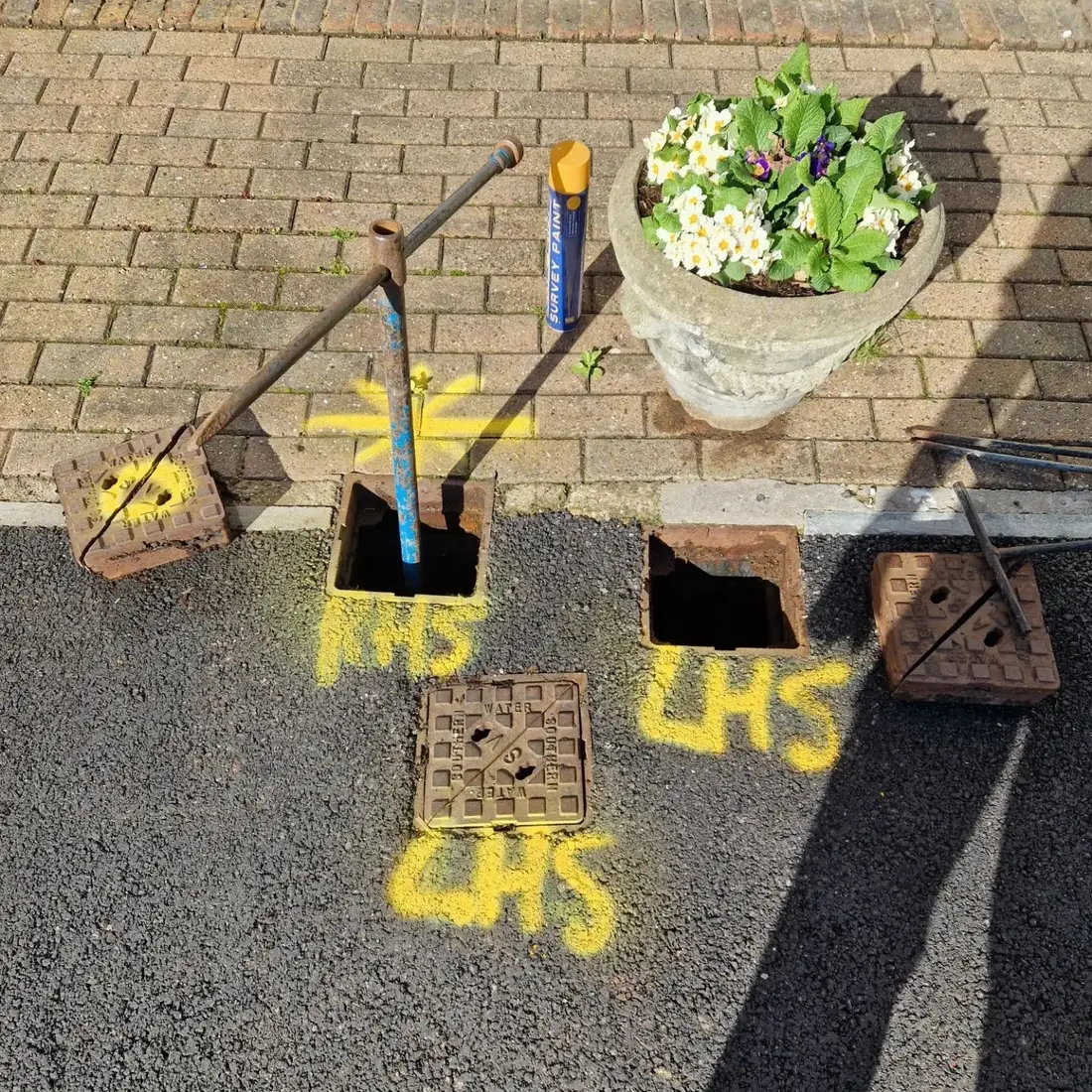
Service route marked out and chambers lifted before any ground is broken
PipeMic acoustic detection
01

Locate the defect before breaking ground

A leak rarely surfaces where it actually is. Water tracks along the pipe trench, under a slab, or into a drain run, and surfaces metres from the failure. We survey the run acoustically — including with the non-invasive PipeMic system — and trace the pipe route so the dig is a metre wide instead of a driveway wide.

  • Acoustic leak detection and correlation across the pipe run
  • Pipe tracing to establish the actual route, depth and material
  • Pressure and flow checks at the stop tap to confirm the diagnosis
  • A clear answer on whether the defect is on your side of the boundary
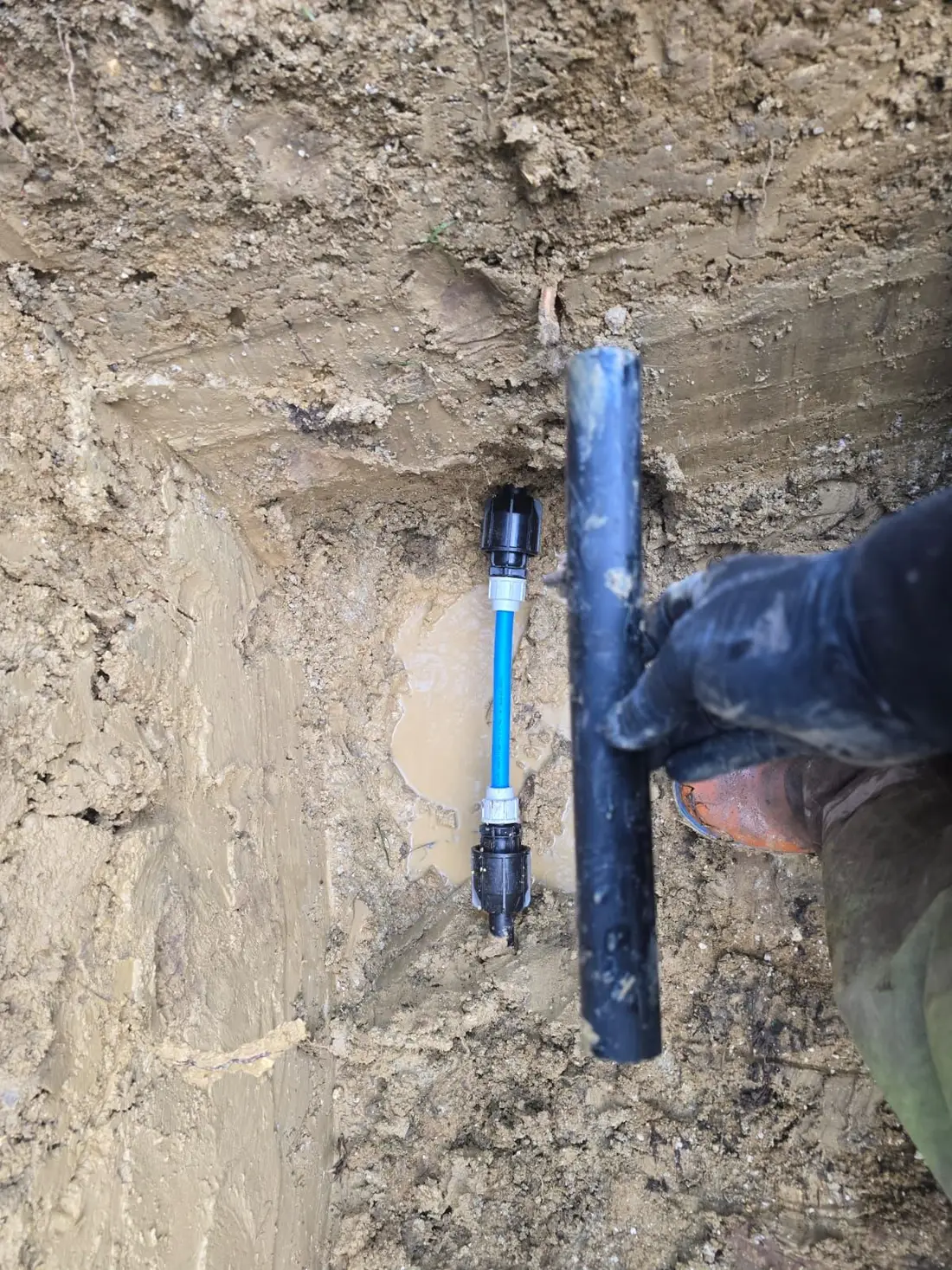
Section of old supply pipe cut out and replaced with new blue MDPE
Trenchless where ground allows
02

Repair the run, or renew it properly

Where the pipe is otherwise sound and the defect is isolated, a targeted repair is faster, cheaper and less disruptive — and we will say so. Where the pipe is lead, undersized, or failing in more than one place, patching it is a false economy. Renewal is carried out in modern blue MDPE, pressure tested and connected to the existing internal stopcock or a new one.

  • Localised repair using compression or electrofusion fittings
  • Full renewal in blue MDPE, sized to the property’s demand
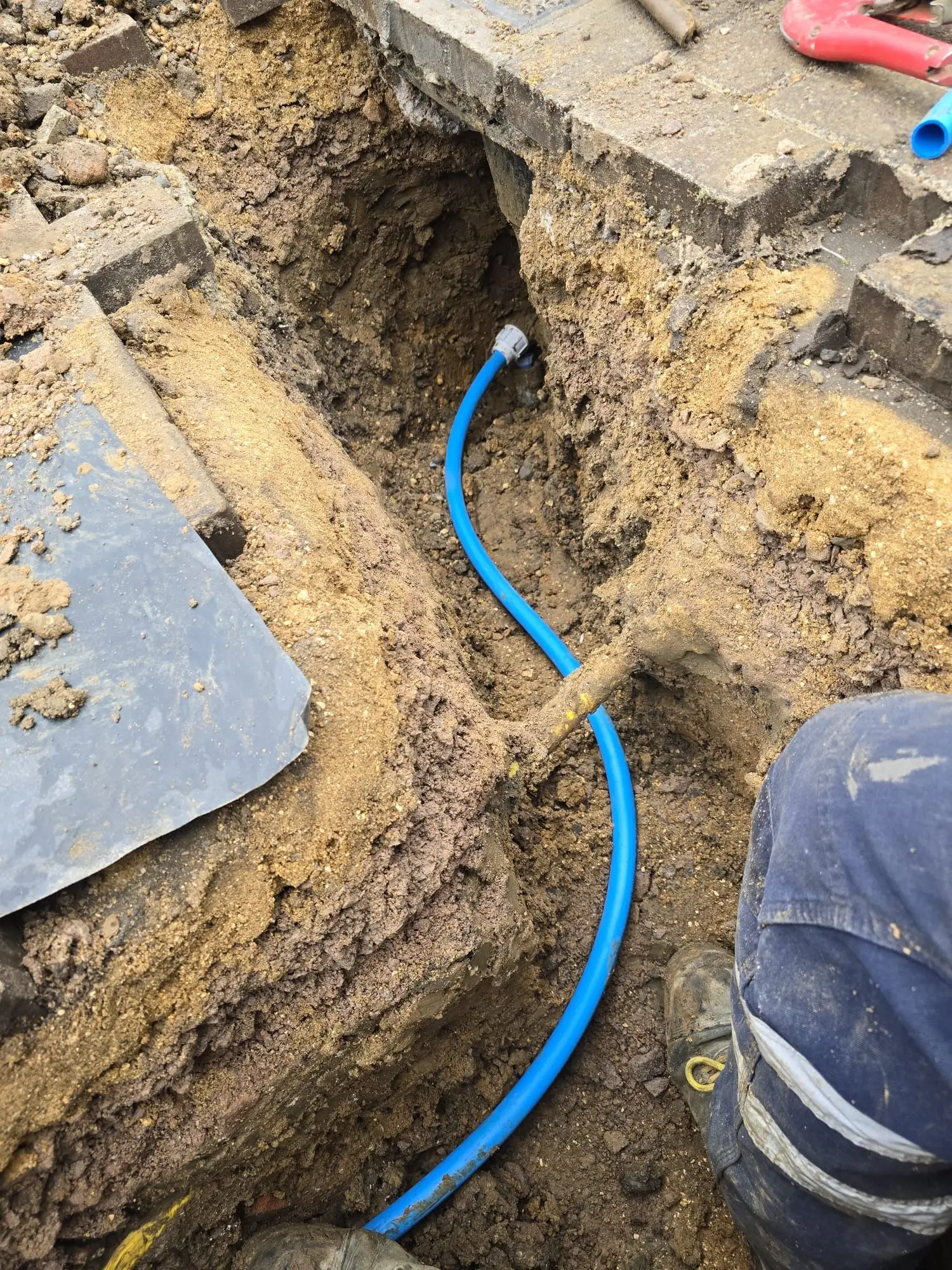
  • Trenchless impact moling under driveways, lawns and forecourts
  • Old lead runs disconnected, capped off and left in the ground
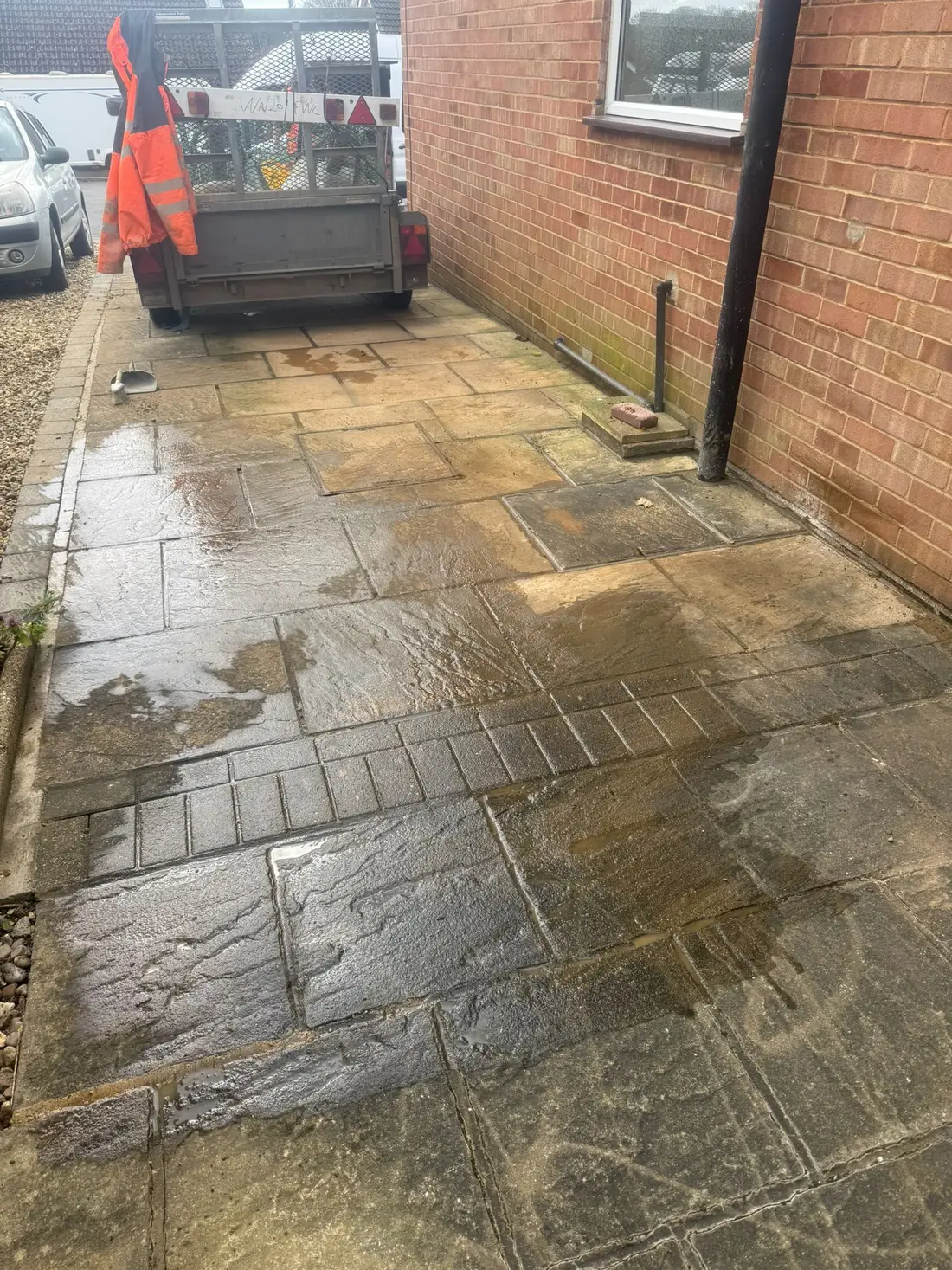
Paving relaid after a Cascade Water Services supply pipe replacement
Reinstatement included
03

Test, certify and put the ground back

A new supply pipe is pressure tested and, where the work requires it, disinfected and sampled before it is handed over. Then the surface goes back: tarmac, block paving, paths, edging and planting. Reinstatement is part of the job and part of the price, not a separate trade you have to chase afterwards.

  • Pressure testing before backfill and again on completion
  • Disinfection and sampling where the scope requires it
  • Tarmac, block paving, paths and landscaping reinstated
  • Highway and footway works coordinated where the run crosses them

Why Cascade

A water contractor, not a general builder with a mini digger.

Supply pipe work sits under the Water Supply (Water Fittings) Regulations and touches drinking water. The accreditations below are what separate a contractor who is permitted to do it from one who is not.

  1. 01

    Thirty years in the water industry

    Cascade Water Services has worked on private and adoptable water infrastructure for over three decades, across domestic streets, commercial sites and live development schemes. Supply pipe work is core business rather than a sideline.

  2. 02

    Accredited for work on drinking water

    LRQA WIRS accreditation, WaterSafe approved contractor status and registration under the WIAPS approved plumber scheme. Together they cover work carried out under the Water Supply (Water Fittings) Regulations and on adoptable networks.

  3. 03

    Pre-qualified for commercial and utility work

    SafeContractor, SMAS Worksafe, Acclaim, Constructionline Gold and Achilles UVDB Silver Plus. Main contractor and utility pre-qualification is a form-filling exercise for us, not a barrier to starting.

  4. 04

    Diagnosis before excavation, every time

    We locate acoustically and trace the route before anything is opened up. It is the difference between a targeted repair and an exploratory trench across a front garden — and it is why most of our work leaves the surface intact.

  5. 05

    One team from survey to reinstatement

    Plant, operatives and traffic management are ours. There is no handover to a groundworks subcontractor halfway through, and no separate trade to chase for the driveway afterwards.

  6. 06

    Trusted on adoptable and developer schemes

    As an accredited Self-Lay Provider we work with developers and water companies — including Albion Water — on adoptable networks. The same standards apply to a single domestic supply pipe.

Independently assessed

Full accreditation detail on the about page.

Technical detail

What actually governs a supply pipe.

Supply pipe work is not a matter of preference. Depth, material, sizing and pressure are all set by regulation or by the water company’s reference level of service. These are the numbers the work is measured against.

Depth of cover
750–1350mm
A supply pipe laid outside a building must sit no less than 750mm and no more than 1350mm below ground level — deep enough to be frost-free, shallow enough to be reachable.
Material
Blue MDPE
Medium-density polyethylene to BS EN 12201, blue for below-ground potable water. It is jointed without solvent, tolerates ground movement, and does not corrode like galvanised steel.
Typical domestic size
25mm
25mm is standard for a single dwelling; 20mm is often found on older runs and can throttle a modern property with two bathrooms. 32mm and above is used for larger or shared supplies.
Accredited mains & services
355mm and above
Cascade is accredited for mains and service connections up to and above 355mm, which covers domestic supplies through to large commercial and development demand.
Reference level of service
0.7 bar / 9 l/min
The minimum static pressure and flow a water company must deliver at the boundary stop tap. Pressure below this inside the property, with the boundary figure intact, points at the private supply pipe.
Lead standard
10 µg/l
The current UK limit for lead in drinking water. Lead has not been permitted in new plumbing since 1970, but pre-1970 supply pipes remain in service across London.
  • Contaminated ground needs barrier pipe

    On former industrial land, filling stations and some brownfield sites, hydrocarbons in the ground can permeate standard MDPE and taint the supply. Where ground conditions indicate it, the run is installed in barrier pipe with a bonded aluminium layer instead.

  • Separation from other services

    A water supply pipe must be kept clear of other buried utilities and of any source of contamination — drainage in particular. Where a shared trench or a crossing is unavoidable, separation and protection are designed in rather than improvised on site.

  • Entry into the building

    The pipe is ducted or sleeved where it passes through the wall or floor slab, so it can be withdrawn and replaced later without breaking out structure, and so movement in the building is not transferred to the pipe.

  • Moling has limits, and we state them

    Impact moling needs ground it can displace. In heavy clay with obstructions, made ground full of rubble, or a route crowded with existing services, it is the wrong tool — and a short open-cut is the faster and safer answer. We survey the route before committing to a method.

Benefits

What you get out of doing it properly.

  • 01

    Pressure and flow restored

    An undersized or partially blocked supply pipe throttles everything downstream. Correctly sized MDPE gives showers, combi boilers and multiple bathrooms the flow they were specified for.

  • 02

    The bill stops climbing

    On a metered supply, every litre lost from a private leak is billed to you. Locating and repairing the defect ends a charge that otherwise runs indefinitely.

  • 03

    Lead out of the drinking water

    Replacing a lead supply pipe removes a recognised health risk at source — one that matters most for children and during pregnancy — and brings the property in line with current expectations.

  • 04

    Your driveway stays where it is

    Trenchless moling installs the new pipe underground between two small entry pits. Where the ground allows it, block paving, tarmac and lawns are never lifted at all.

  • 05

    No damage bill behind the leak

    A supply pipe leaking under a slab or against a foundation does slow, expensive damage. Finding it early is far cheaper than the structural drying and making good that follows.

  • 06

    A defensible record for the property

    Pressure test results, certification and as-built detail on file — useful when a property is sold, surveyed, insured or handed over to a client.

Common questions

Before you enquire.

The questions we are asked most often about this service, answered without the sales gloss.

See all FAQs
Who is responsible for the supply pipe — me or the water company?

The water company is responsible for the pipe on the public side. From the point where it crosses the public–private boundary to your building, the supply pipe is private pipework and the responsibility of the property it supplies, including any leak on it. That is why a leak on a supply pipe is billed to you rather than repaired for free, and it is the most common surprise for homeowners when the first bill arrives.

How do I know whether my supply pipe is leaking?

The usual signs are a metered bill that has risen without a change in usage, pressure that has dropped gradually, damp or standing water on the run between the boundary and the building, or a patch of ground that stays green and soft in dry weather. A simple check is to turn everything off inside and watch the meter — if it is still turning, water is going somewhere. We can confirm it acoustically without excavating.

Can a supply pipe be repaired rather than replaced?

Often, yes. If the pipe run is otherwise sound and the defect is isolated, a targeted repair is faster and far less disruptive, and we will recommend it. Where the pipe is lead, undersized for the property, or has failed in more than one place, repair is a false economy — a pipe that has failed twice will fail again. We survey first and tell you which case you are in rather than defaulting to the larger job.

Will you have to dig up my driveway or garden?

Usually not. We locate the defect acoustically before breaking any ground, and install replacement pipework using trenchless impact moling wherever ground conditions allow — the new pipe is drawn underground between two small pits, leaving the surface between them untouched. Where excavation is unavoidable, tarmac, block paving, paths and landscaping are reinstated as part of the works.

How deep does a water supply pipe have to be?

Outside a building, a supply pipe must be laid no less than 750mm and no more than 1350mm below ground level. The minimum keeps it below the frost line; the maximum keeps it accessible for repair. Pipework found shallower than that on an older property is one of the reasons an otherwise serviceable run sometimes has to be renewed rather than repaired.

How long does a supply pipe replacement take?

A straightforward domestic replacement is commonly a one-day job where the route can be moled and the connection is simple. Longer runs, difficult ground, highway crossings or a new connection application will extend that. We give you the expected duration after the survey, once the route and method are known — not before.

Do I need permission or an application to replace a supply pipe?

A like-for-like renewal of private pipework generally does not, but the work must comply with the Water Supply (Water Fittings) Regulations, and a new or altered connection at the main does require an application to the water company. Where an application is needed we prepare and manage it as part of the job, including the liaison with the incumbent water company.

Do you cover London and the surrounding counties?

Yes. London is a core operating area for supply pipe repairs, replacement and installation, alongside Hertfordshire, Bedfordshire, Essex, Cambridgeshire and Buckinghamshire. If you are unsure whether we reach your postcode, ask — we will tell you straight away rather than sending someone on a wasted visit.

Supply pipe enquiry

Repair, or replacement? Send us the symptom.

A short description of what you are seeing — pressure, bills, wet ground, known lead pipework — is usually enough for us to say which of the two you are looking at before anyone comes out. Not sure? Attach a few photos of the problem, the pipe or your stopcock, and we will advise on the options.

Or reach us directly

Burst main or major leak? The freephone line is answered 24 hours a day.

Request a quote

Site layouts, utility drawings, correspondence or photos of the problem. Up to 5 files, 15MB in total — PDF, JPG, PNG, HEIC, DWG or DXF.

We use these details to answer your enquiry and nothing else.