
Water neutrality evidence for planning applications

Where a local authority requires a development to add no net water demand, the requirement is met on paper before it is met on site. We calculate the baseline, design the reduction, and produce the evidence the planners actually ask for.

Planning a scheme?

The service

A planning condition, not an environmental gesture.

Water neutrality means a development results in no increase in total water demand across the supply area. New demand from the scheme has to be balanced by reductions made elsewhere, so the catchment is no worse off after the development than before it.

It has moved from aspiration to condition in areas under real supply pressure. Hertfordshire and Bedfordshire — much of it served from seriously water stressed resource zones — are increasingly places where a scheme has to demonstrate this before consent, not afterwards. Where the requirement applies and has not been addressed, the application stalls.

This is an evidence exercise before it is an engineering one. It needs a defensible baseline, a demand forecast for the consented scheme, a reduction strategy that survives scrutiny, and an offset approach for whatever demand remains. We prepare that package and deal with the water company and the planning team around it.

What we do

Measure it, reduce it, offset what is left.

Neutrality is arithmetic with a planning consequence. Each stage below has to be defensible on its own, because a challenge to any one of them undermines the whole statement.

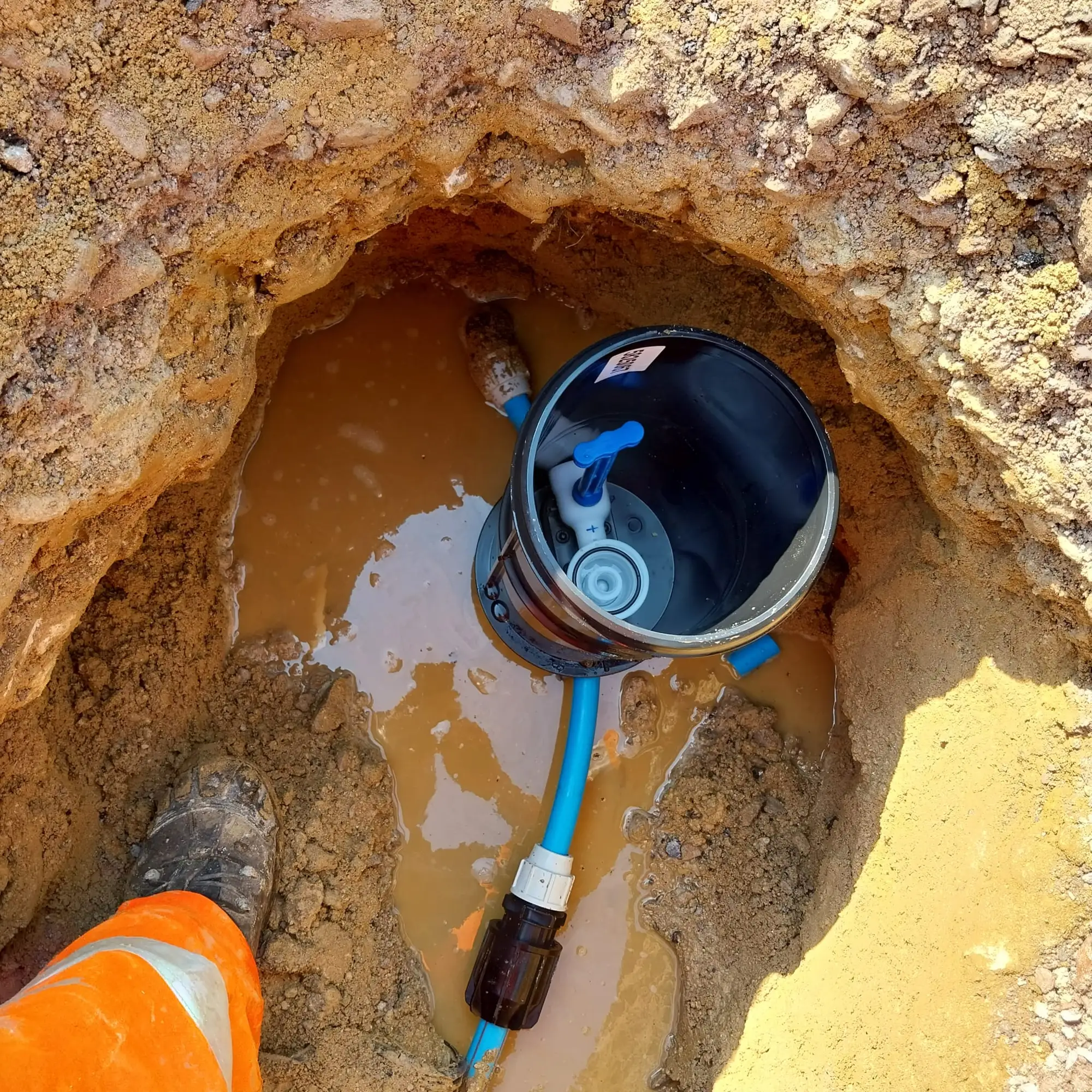
Water meter chamber of the type used to establish a site’s baseline consumption
Evidenced baseline
01

Baseline assessment and demand forecast

We establish current water use on the site — which for a genuinely undeveloped site may be nil, and for a redevelopment is a figure that has to be evidenced rather than claimed — then forecast demand for the consented scheme against occupancy and use class. That difference is the number everything else works from.

  • Existing site water use established and evidenced
  • Demand forecast for the consented scheme and occupancy
  • Assessment against the relevant resource zone position
  • A clear statement of the net demand to be addressed
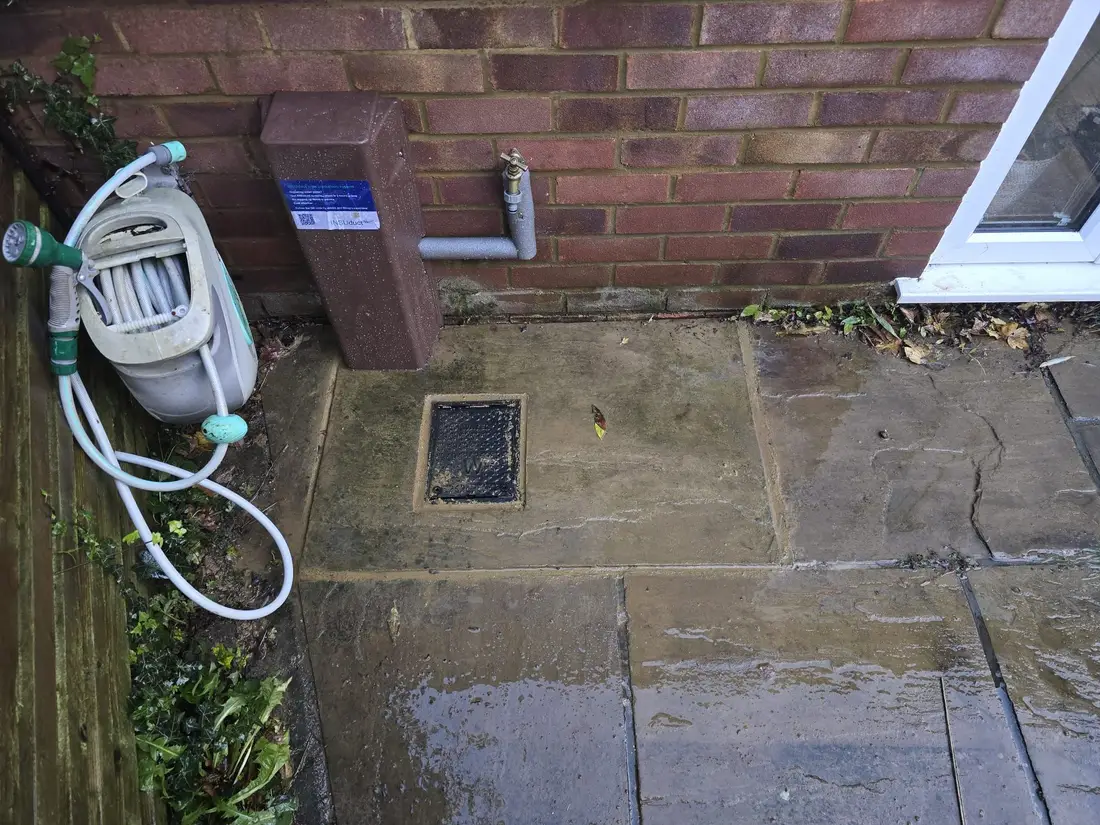
External water supply connection of the kind assessed when specifying a development for water efficiency
Reduce before offsetting
02

Efficiency design to cut demand at source

Every litre designed out is a litre that does not need offsetting, and reduction is almost always cheaper than offset. We identify the fittings specification, appliance selection and where appropriate rainwater or greywater reuse that bring the scheme down towards, or to, the tighter Part G figure.

  • Fittings and appliance specification to hit the target figure
  • Rainwater harvesting and reuse assessed where it pays
  • Landscape and irrigation demand considered, not ignored
  • Reduction prioritised over offset wherever it is achievable
Map of the Hertfordshire, Bedfordshire, South East and East of England area covered by Cascade Water Services
Submission-ready
03

Offset strategy and the written statement

Whatever demand cannot be designed out has to be balanced elsewhere, typically by retrofitting water efficiency in existing properties within the same supply area. We set out that strategy and produce the Water Neutrality Statement, then support it through consultation with the water company and the planning authority.

  • Offset approach identified for residual demand
  • Water Neutrality Statement prepared for submission
  • Liaison with the water company and planning team
  • Responses to consultee comments during determination

Why Cascade

Written by people who install the things being specified.

Water neutrality statements are frequently written by consultants who have never fitted a supply. That shows when the strategy meets a site.

  1. 01

    Thirty years in the water industry

    The demand assumptions, the fittings and the metering arrangements in our statements are ones we work with on site, not figures lifted from a template.

  2. 02

    We understand the supply side too

    Neutrality is about a resource zone, not just a building. Knowing how the network and the connection actually work makes for a more defensible assessment.

  3. 03

    Local to the areas where it bites

    Hertfordshire and Bedfordshire are our operational heartland, and they are among the places where water stress has pushed neutrality into local planning expectations.

  4. 04

    Water company liaison is routine here

    As an accredited contractor we deal with undertakers as a matter of course, which shortens the consultation exchange considerably.

  5. 05

    Delivery, not just documentation

    If the strategy calls for metering, connections or infrastructure work, the same organisation can carry it out rather than handing you a report and a gap.

  6. 06

    We will tell you if it does not apply

    Not every scheme in every area needs a neutrality assessment. Where the requirement does not bite, we will say so rather than sell you a document nobody asked for.

Independently assessed

Full accreditation detail on the about page.

Technical detail

The numbers a statement is built on.

Water neutrality assessments are argued in litres per person per day. These are the reference figures and the mechanisms behind them.

Part G standard
125 l/p/d
The Building Regulations Part G standard for new dwellings: 125 litres per person per day, calculated by the water efficiency methodology rather than measured.
Part G optional requirement
110 l/p/d
The tighter optional requirement that a planning authority can impose through condition where local water stress justifies it. Many neutrality strategies start by adopting this as a minimum.
Neutrality definition
No net increase
Total water use in the supply area after the development is no greater than before it. New demand is either designed out or balanced by reductions elsewhere in the same area.
Offset mechanism
Retrofit elsewhere
Residual demand is typically balanced by funding water efficiency retrofits in existing properties within the same supply area, so the saving is real and in the right catchment.
Assessment basis
Per person, per day
Demand is assessed against occupancy rather than floor area, which is why the housing mix and assumed occupancy of a scheme materially change the answer.
Where it applies
Water stressed areas
The requirement follows local plan policy, planning conditions and water company guidance, concentrated in areas classified as seriously water stressed — which includes much of the South East and the East of England.
  • Reduction is cheaper than offset, every time

    A litre designed out of the scheme costs the price of a better fitting. A litre offset costs the price of a retrofit in somebody else’s property, plus the administration of arranging it. Efficiency is where the strategy should spend its effort first.

  • Occupancy assumptions do the heavy lifting

    Because demand is assessed per person, the assumed occupancy of the housing mix drives the total. Those assumptions need to be stated openly and justified, since they are the first thing a consultee will test.

  • Landscape and non-domestic use get forgotten

    Irrigation, communal facilities and commercial elements of a mixed-use scheme all consume water and all belong in the baseline. Statements that quietly count dwellings only tend to come back.

  • It is not the same as a drainage or SuDS strategy

    Water neutrality is about supply demand. Surface water drainage and SuDS are separate requirements with separate documents, and satisfying one does nothing for the other.

Benefits

What getting this right protects.

  • 01

    The determination timetable

    Neutrality evidence submitted with the application is assessed alongside everything else. Submitted after a holding objection, it costs a planning cycle.

  • 02

    A defensible position

    Stated assumptions, evidenced baseline and a clear calculation — so a consultee testing the numbers finds them rather than finding gaps.

  • 03

    Lower offset cost

    Every litre designed out at specification stage is one you never have to fund a retrofit to balance.

  • 04

    Fewer late design changes

    Fittings and appliance specifications settled early, rather than being revised once a condition lands and the kitchens are ordered.

  • 05

    One party for evidence and delivery

    Where the strategy needs metering or infrastructure, the same organisation installs it — the report does not end at a recommendation.

  • 06

    An honest answer on whether you need it

    Including, where the requirement does not apply to your site, being told that instead of being sold a statement.

Common questions

Before you enquire.

The questions we are asked most often about this service, answered without the sales gloss.

See all FAQs
What does water neutrality actually mean?

It means the total water used in the supply area after a development is completed is no greater than it was before. New demand created by the scheme has to be balanced — first by designing demand out through efficiency, and then by offsetting whatever remains through reductions elsewhere in the same supply area. The catchment ends up no worse off.

Does my development need a water neutrality assessment?

It depends on where it is and what the local planning position says. The requirement is concentrated in areas classified as seriously water stressed and arrives through local plan policy, a planning condition or water company guidance. Much of the South East and the East of England, including parts of Hertfordshire and Bedfordshire, now sits in that category. Send us the site and the policy position and we will tell you plainly whether it applies.

How is water demand calculated?

In litres per person per day, assessed against the occupancy of the scheme rather than its floor area. The Building Regulations Part G standard for new dwellings is 125 litres per person per day, with a tighter optional requirement of 110 that planning authorities can impose where local water stress justifies it. Because the figure is per person, the housing mix and the assumed occupancy materially change the total.

What is an offset, in practice?

Demand that cannot be designed out of the scheme is balanced by funding water efficiency improvements in existing properties within the same supply area — retrofitting fittings and appliances so the saving is real and lands in the right catchment. It works, but it is more expensive per litre than designing the demand out in the first place, which is why efficiency comes first.

When should this be done?

Pre-application, alongside the rest of the submission. Neutrality evidence produced with the application is assessed as part of the normal process. Produced in response to a holding objection or a refusal, it costs a determination cycle and often forces design changes that are far more expensive at that stage.

Is water neutrality the same as a SuDS or drainage strategy?

No. Water neutrality is about supply — how much water the development will use. SuDS and drainage strategies are about surface water leaving the site. They are separate requirements with separate documents, and satisfying one does nothing whatsoever for the other.

Water neutrality enquiry

Send the site and the policy position.

The location, the scheme and whatever the authority has said about water demand are enough for us to tell you whether a neutrality assessment is required, and what it would take to satisfy it.

Or reach us directly

Burst main or major leak? The freephone line is answered 24 hours a day.

Request a quote

Site layouts, utility drawings, correspondence or photos of the problem. Up to 5 files, 15MB in total — PDF, JPG, PNG, HEIC, DWG or DXF.

We use these details to answer your enquiry and nothing else.