Project overview
Cascade Water Services was appointed to undertake new water connection works serving properties at 104 and 106–108 High Street, Teddington, in the London Borough of Richmond upon Thames. The project involved installing new water supplies within a busy high street environment, where traffic movements, public safety and continued access to local businesses were important considerations.
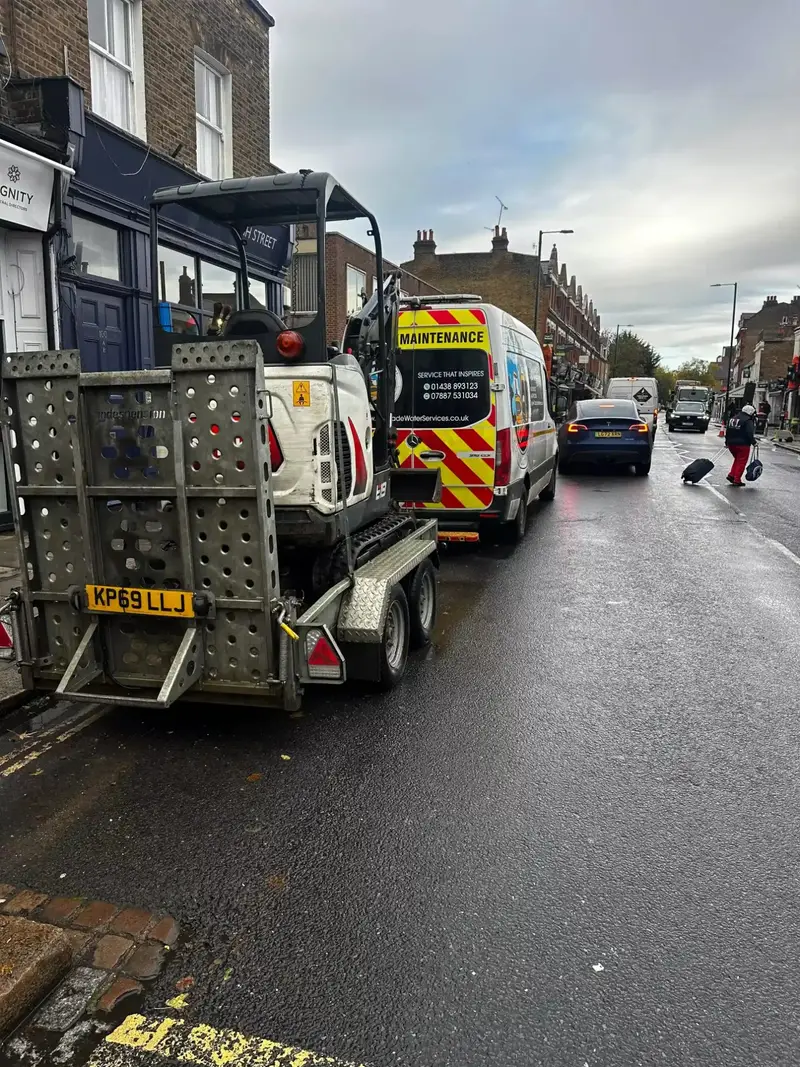
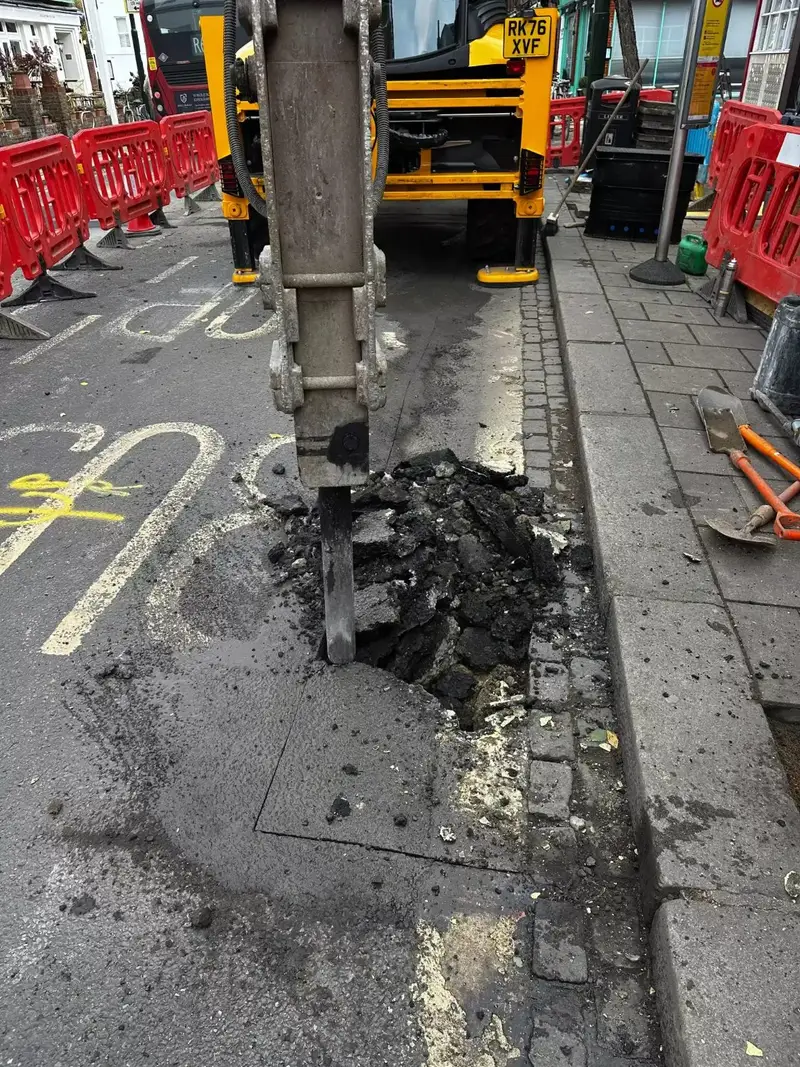
The works required excavation within both the carriageway and footways, alongside temporary traffic management and the coordination of specialist plant and reinstatement operations.
A key part of Cascade’s approach was identifying an opportunity to complete two separate customer projects during the same highway occupation. Rather than submitting separate permits and returning to the High Street at a later date, Cascade developed a coordinated programme that allowed both installations to be undertaken under a single Section 50 permit. This approach reduced duplicated work, helped control costs for the customers and avoided the disruption associated with reopening the highway for a second scheme.
The client’s challenge
Working on a busy High Street presents challenges that extend well beyond the physical installation of new water pipes. The properties required new water connections from the existing main, with excavation needed across the highway and footways to reach the proposed supply locations. The location included active commercial premises, pedestrian routes, passing traffic and a bus stop affected by the proposed works.
A poorly coordinated installation could have resulted in unnecessary traffic congestion, restricted access to shops, additional highway occupation and increased costs. The main challenge was therefore to complete the connections safely and efficiently while maintaining access to the surrounding businesses and minimising disruption to the wider area.
Cascade also needed to consider the practicalities of completing two schemes simultaneously, including sequencing excavations, managing specialist equipment, arranging reinstatement and ensuring the highway works progressed within the permitted programme.
Combined planning and highway coordination
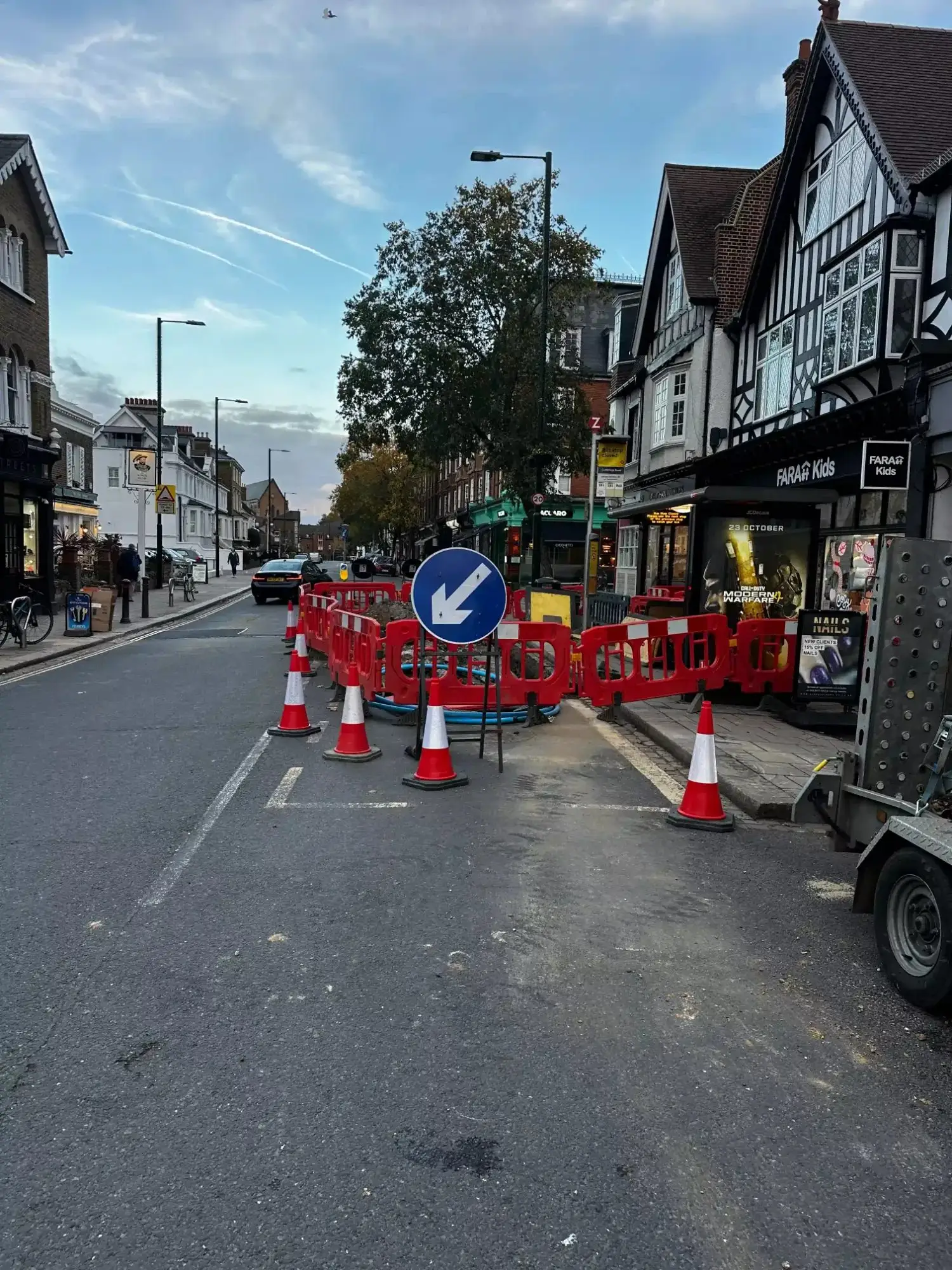
Cascade developed a coordinated construction programme that brought both water connection projects together under one Section 50 permit. The approved works arrangement included two-way temporary traffic lights and a bus stop suspension.
We also organised advance warning measures and liaised with the relevant local authorities and local press to help inform road users ahead of the works. This early engagement was particularly important given the High Street location, where disruption could affect businesses, customers, public transport and through traffic. By combining the projects, Cascade avoided the need for a second period of highway excavation and traffic management.
Phased excavation and traffic management
The construction methodology was designed around a half-and-half approach to working across the carriageway. This meant completing the works in controlled sections rather than opening the full width of the road at once.
The planned sequence involved preparing the initial excavations, installing and capping the new supply pipework, backfilling completed sections and then progressing to the live connection side. This allowed the works to be coordinated with the temporary traffic management arrangements while keeping the programme moving.
Vacuum excavation and mechanical excavation using a JCB were included in the construction plan, allowing the team to select appropriate methods for exposing existing infrastructure and preparing the new connection trenches.
New water connections and manifold installation
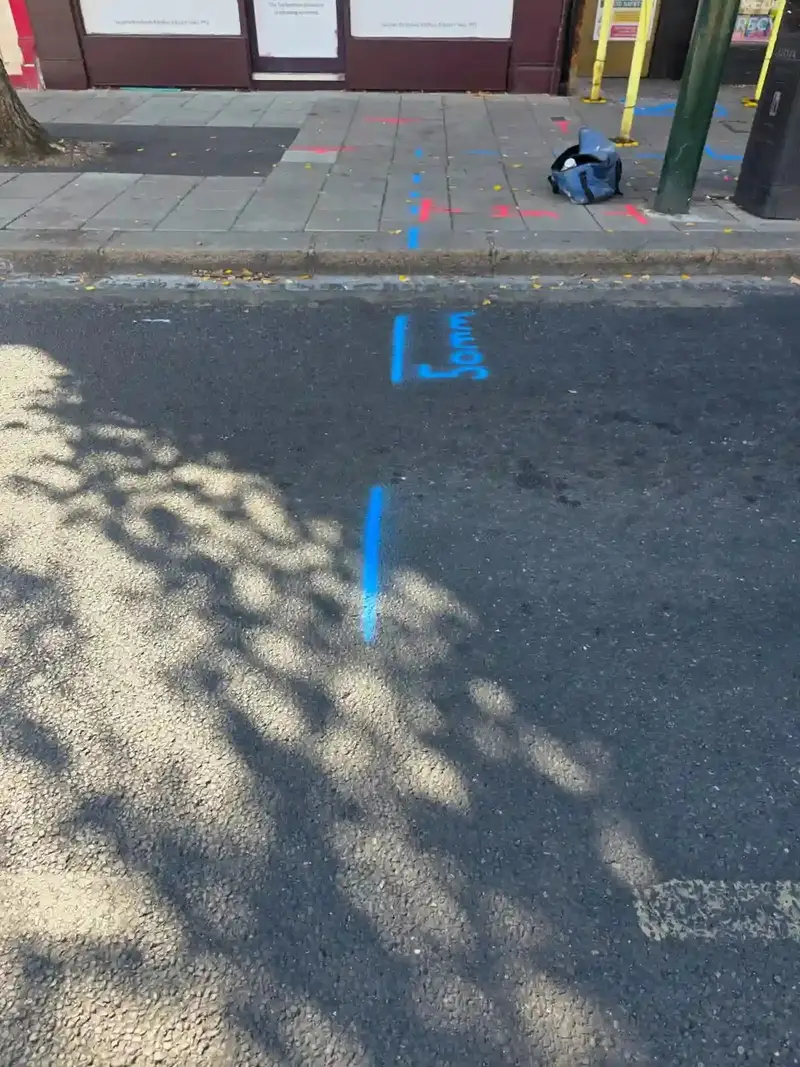
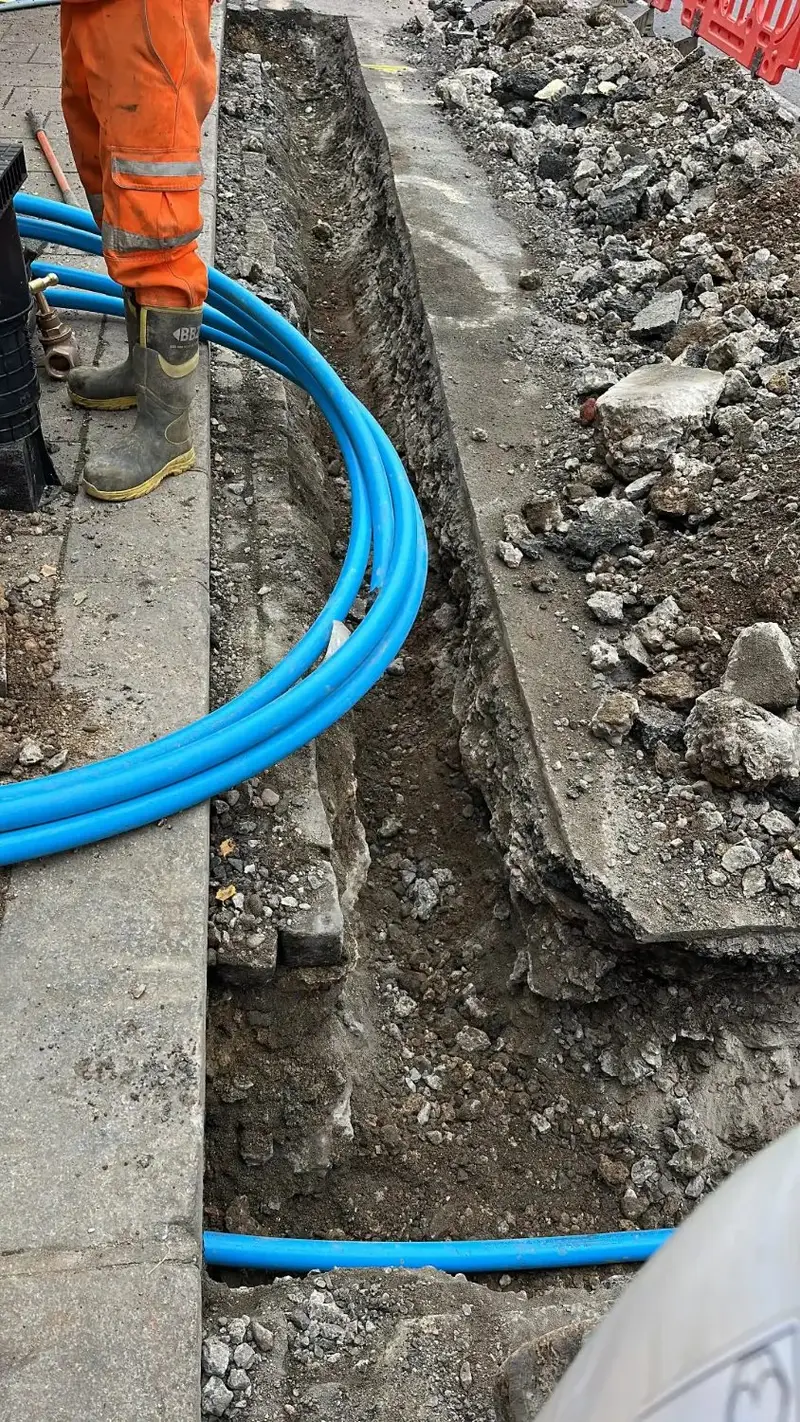
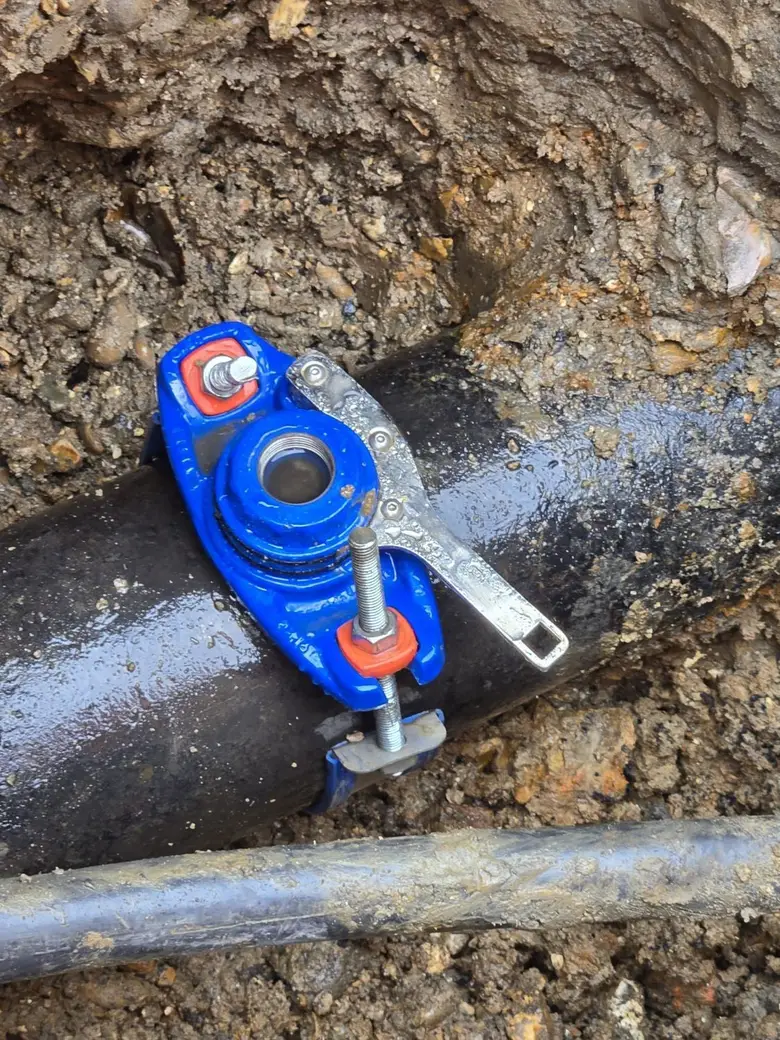
The project included a new 50mm MDPE connection to the existing 4-inch cast iron water main, alongside two 25mm water connections. A manifold arrangement was also installed to accommodate multiple individual supplies.
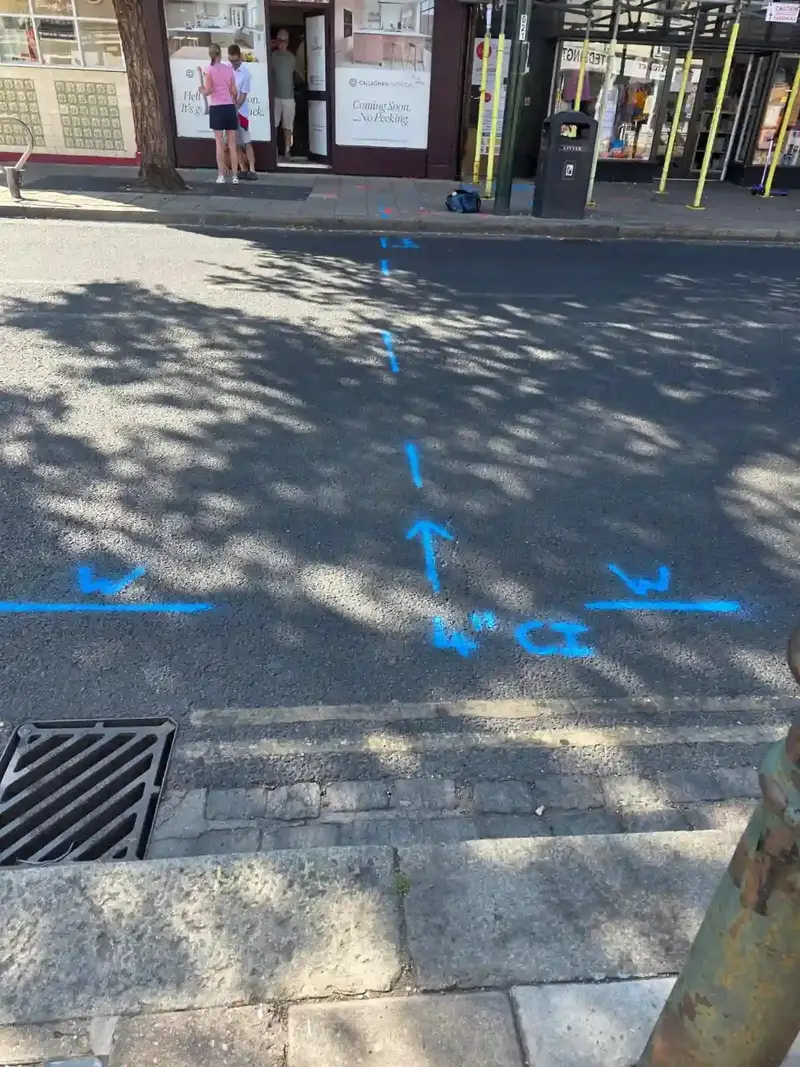
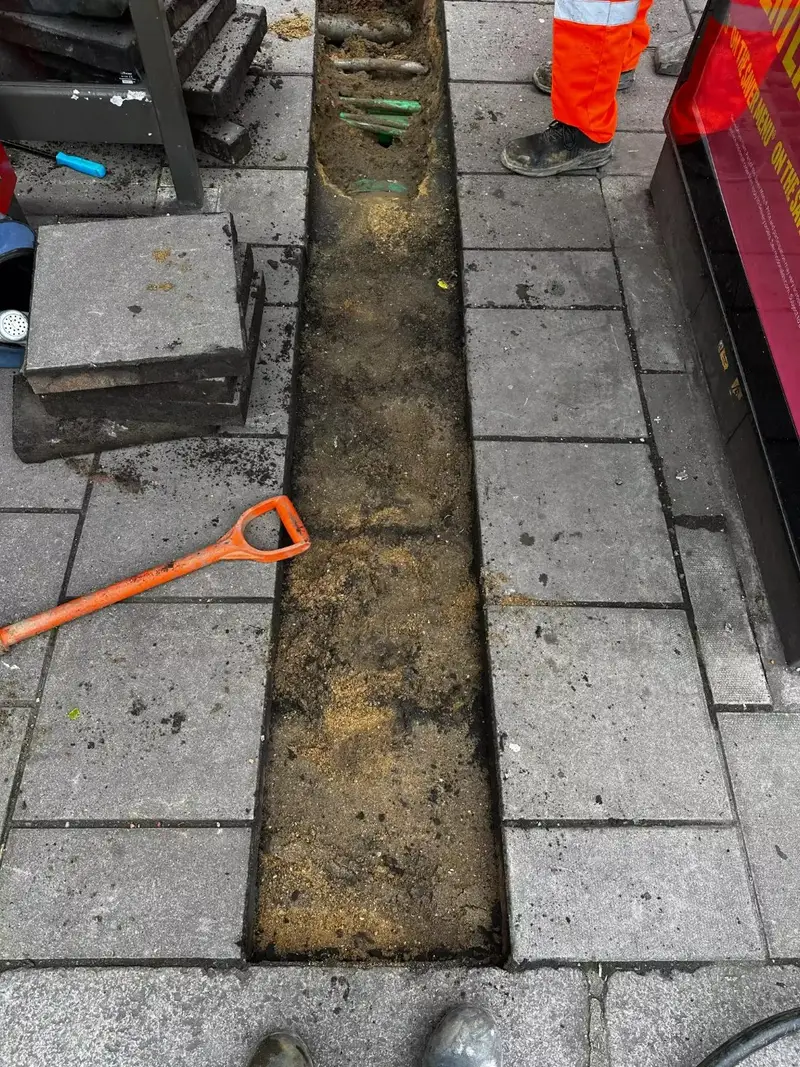
The installation involved preparing the excavations, routing the new pipework through the carriageway and footways, making the required connections and providing accessible connection and metering arrangements. The work was sequenced so the new 50mm and 25mm pipework could be joined across the carriageway during the planned connection phase. By undertaking these installations together, Cascade reduced repeated excavation and coordinated the works as a single programme.
Maintaining access to High Street businesses
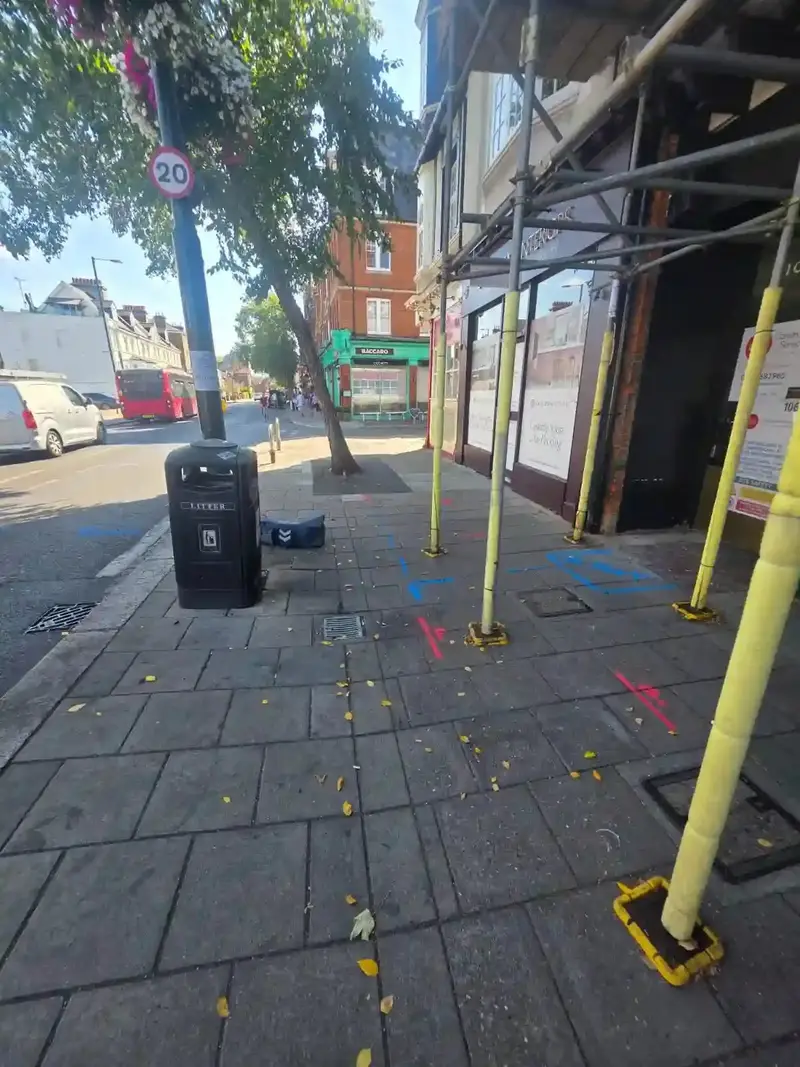
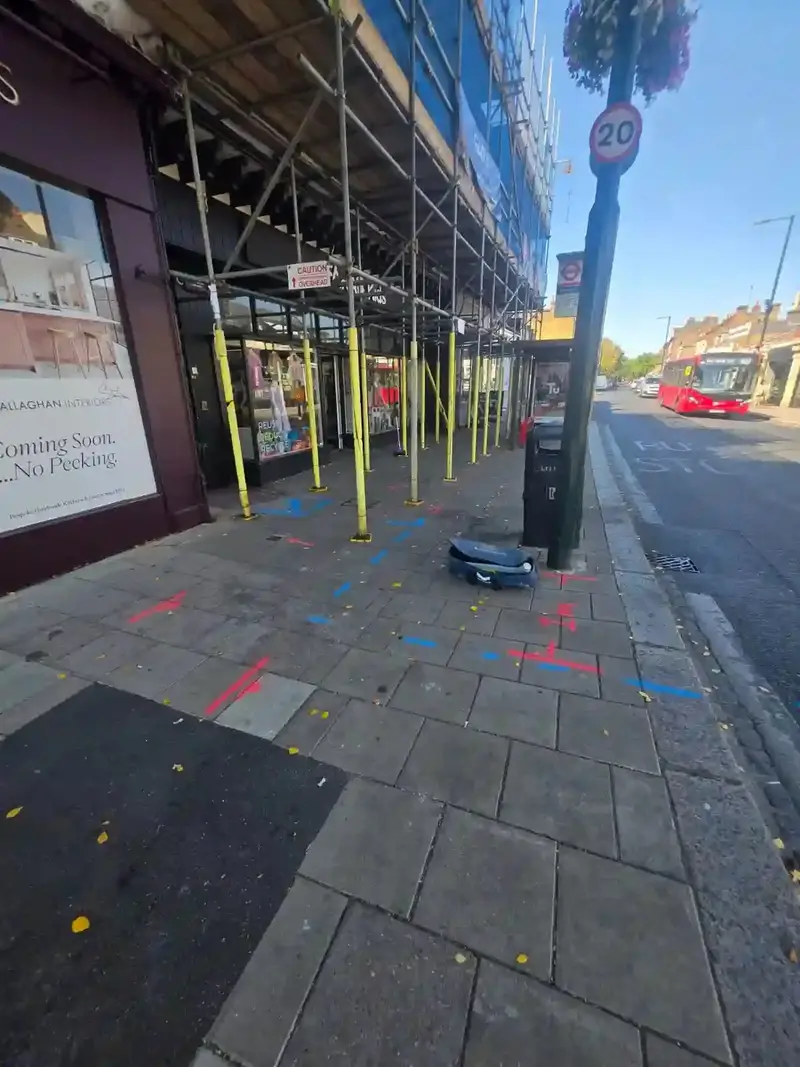
Maintaining pedestrian access was a central consideration throughout the works. Temporary barriers, clearly defined working areas and pedestrian arrangements were used to separate the public from the excavations.
The programme was managed to keep the entrances to High Street shops accessible throughout the project. This required coordination between the excavation teams, traffic management operatives and specialist contractors, particularly where the works extended into the footways. The photographic completion report documents the temporary traffic management arrangements, pedestrian routes and working areas throughout the installation.
Backfilling, reinstatement and site clearance
Once the connections were completed, the excavations were backfilled and the affected highway and footway surfaces reinstated. The works included reinstatement around the new supply pipework and manifold installations, with the objective of returning the affected areas to service and removing the temporary working arrangements.
The coordinated programme allowed both customer schemes to progress through excavation, installation and reinstatement without requiring a second highway permit.
Challenges overcome
The busy High Street location required a traffic management arrangement that accommodated ongoing vehicle movements while providing a safe working area. Advance warnings, temporary traffic lights and liaison with the relevant stakeholders were essential to preparing road users for the works.
Combining two customer schemes introduced additional planning requirements but provided an opportunity to avoid duplicated highway works. By coordinating both installations within the same programme, Cascade reduced the need for repeat excavation, traffic management mobilisation and permit administration.
Excavation in an established High Street environment required careful consideration of existing underground infrastructure. The planned use of vacuum excavation and mechanical plant, supported by the staged construction methodology, allowed the works to be approached in a controlled manner.
The works also had to progress without preventing customers and pedestrians from accessing businesses along the High Street. The working areas were managed and the programme coordinated around this requirement, with no complaints reported during the project.
Project outcome
The project demonstrated the practical benefits of combining technical water connection expertise with effective highway planning and project management. Cascade successfully delivered two separate water connection schemes within a single permit arrangement, avoiding a return visit that would otherwise have required further highway occupation.
For the customers, this reduced duplicated costs, administrative requirements and potential delays. For the local community, it meant one coordinated period of disruption rather than two separate programmes of works.
Throughout the project, access to High Street businesses was maintained and no complaints were reported. The outcome demonstrates how careful forward planning can make a meaningful difference to the cost and impact of utility infrastructure works.