Project overview
Cascade Water Services installed three new water supplies at 57 Harley Street, London W1G 8QS: one 90mm, one 50mm and one 32mm. All three were taken off the existing 4-inch cast iron Thames Water main in the carriageway outside the property.
The works were carried out by open trench under a road closure, with the permit issued under reference SEC100796 and the closure under reference HIGH100991.
Harley Street is in the middle of London, and the site was highly visible. The whole job, from closing the road to reinstating it, was done in three days.
The challenge
The basement at 57 Harley Street extends out beneath the road. A trench dug in the wrong place between the main and the building risked breaking through into it, so the route for the new supplies had to be settled before anything was excavated.
The answer was to follow the line of the existing lead supply. An old cover in the road, believed to be the shut-off for that supply, gave the line to work to. Following it kept the excavation clear of the basement and gave the right location for the drill-throughs into the property.
The job also put three connections of three different sizes onto one length of old cast iron main, with the 90mm connection needing a branch drill on site to make it.
All of this was in the middle of London, on a highly visible street, under a road closure. That left no room for a programme that drifted: the work had to be sequenced tightly enough to be in and out in three days.
Planning the programme
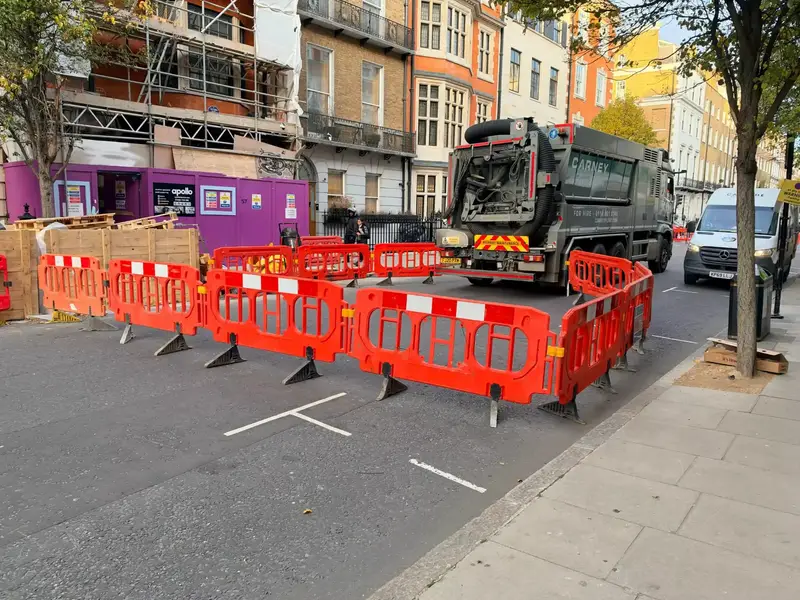
The work was programmed across three days, and it was completed in three. On the Monday the road closure was set up by a traffic management contractor, the trench was opened by vacuum excavation and JCB, and the 90mm pipework was installed.
The branch drill was booked for the Tuesday. Installing the 90mm the day before meant the pipework was already in place when the drill arrived, so the main could be drilled that day, followed by the backfill and the meter pit installations. The tarmac reinstatement was programmed for the Wednesday.
The customer had all of the meters on site, and they were checked before the works began.
Excavation
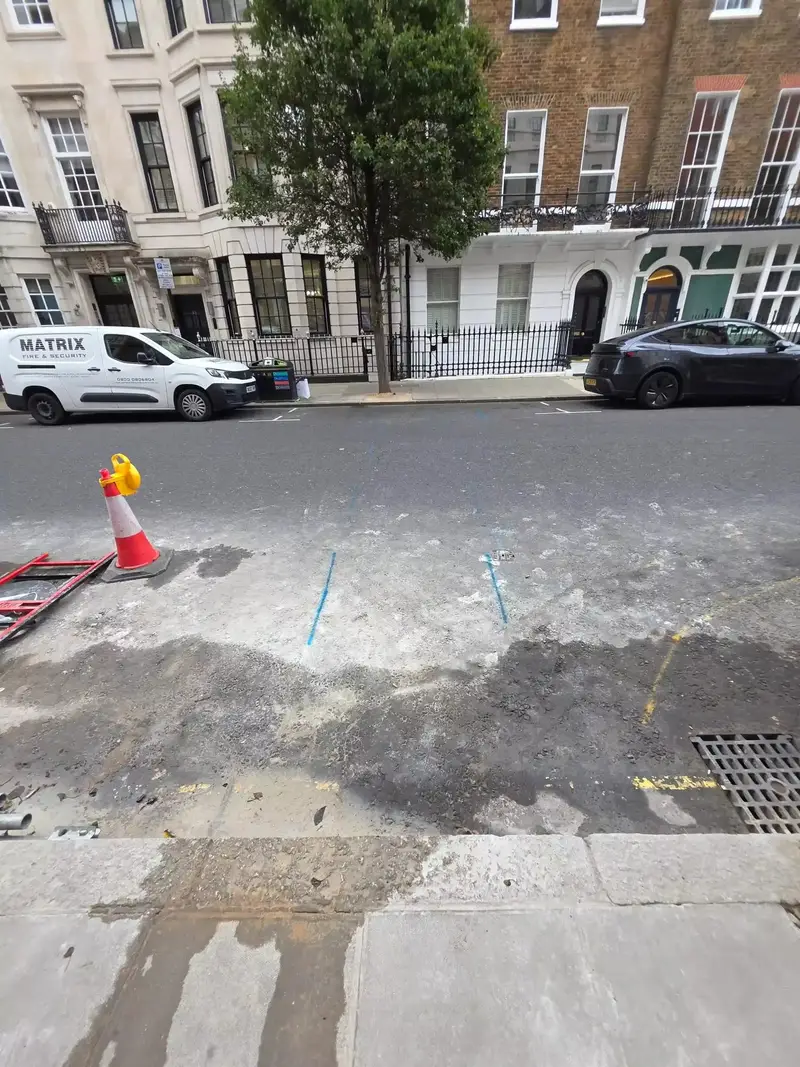
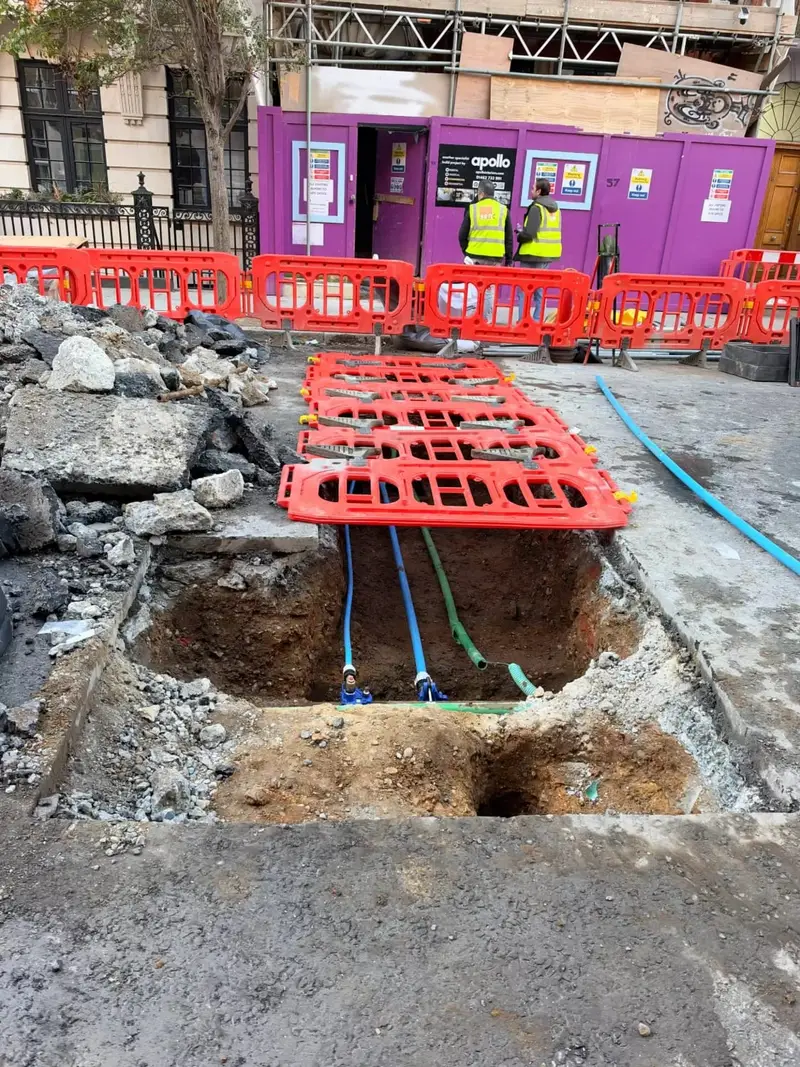
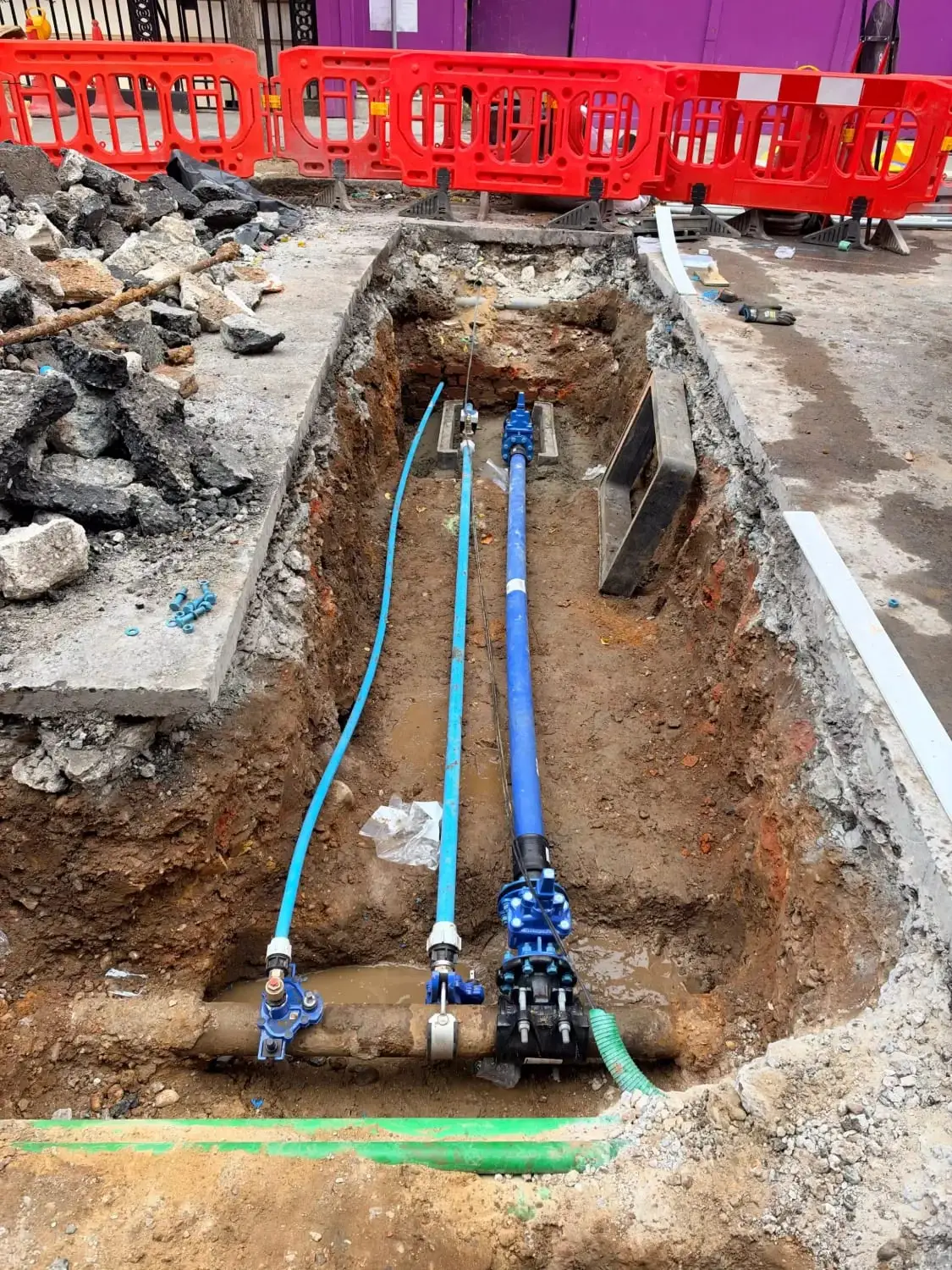
The supply routes were marked out on the road surface before excavation started. The trench was then opened with a vacuum excavator and a JCB, running from the cast iron main to the front of the property, with the working area barriered off inside the closure.
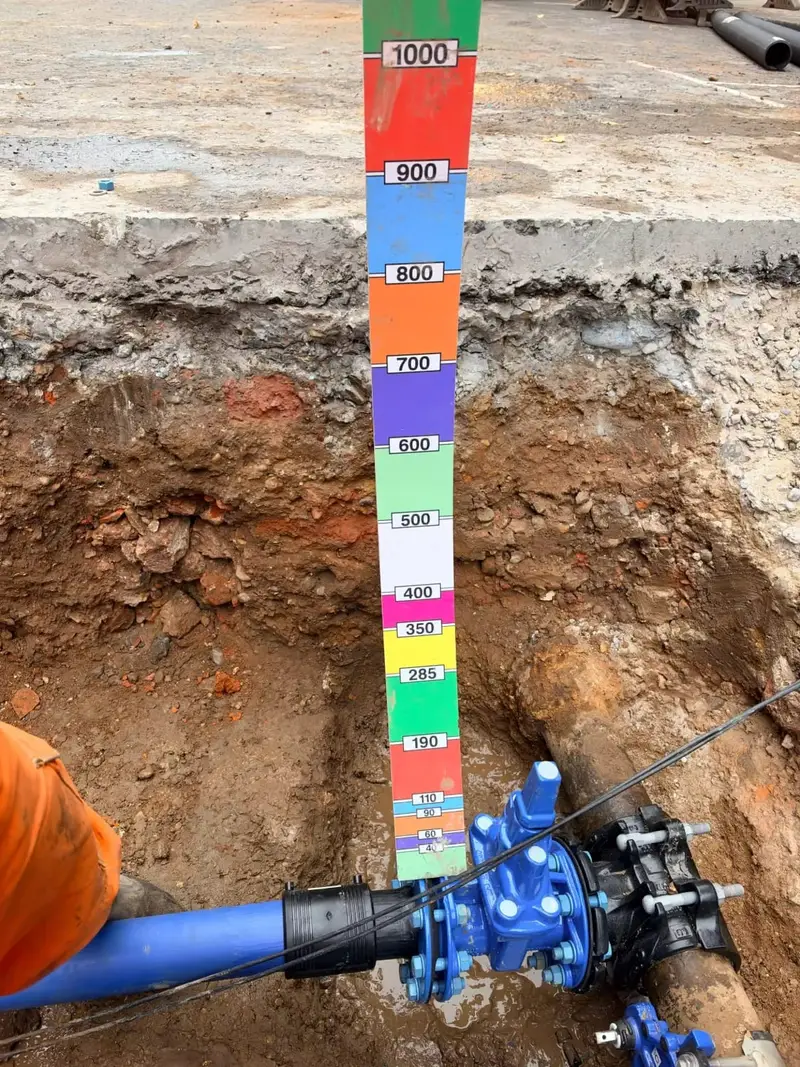
With the main exposed, the depth of the new connection below the road surface was checked against a graduated staff.
Connections to the cast iron main
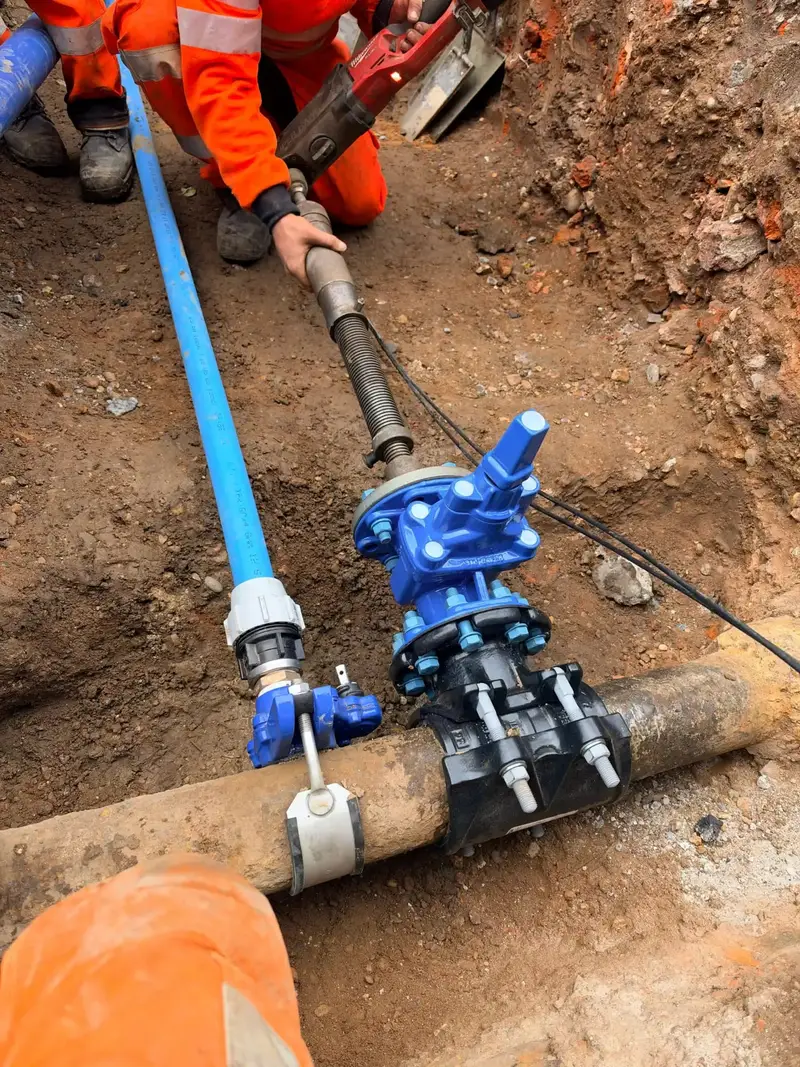
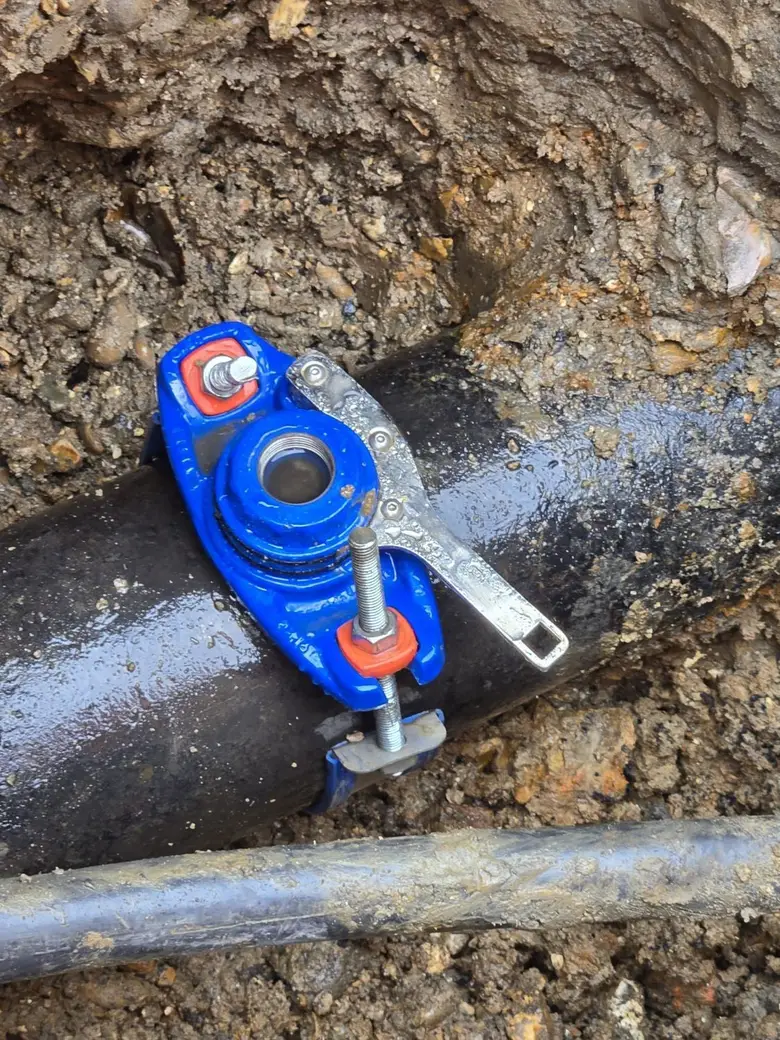
The 90mm supply was connected through a branch tee clamped around the cast iron main, with a gate valve bolted to the tee. The branch drilling machine works through that valve to cut into the main, which is the method for taking a larger branch off an existing main.
The 50mm and 32mm supplies were connected to the same main alongside it, each through its own smaller connection. All three supplies were then laid side by side along the one trench towards the property.
Meters, backfill and reinstatement
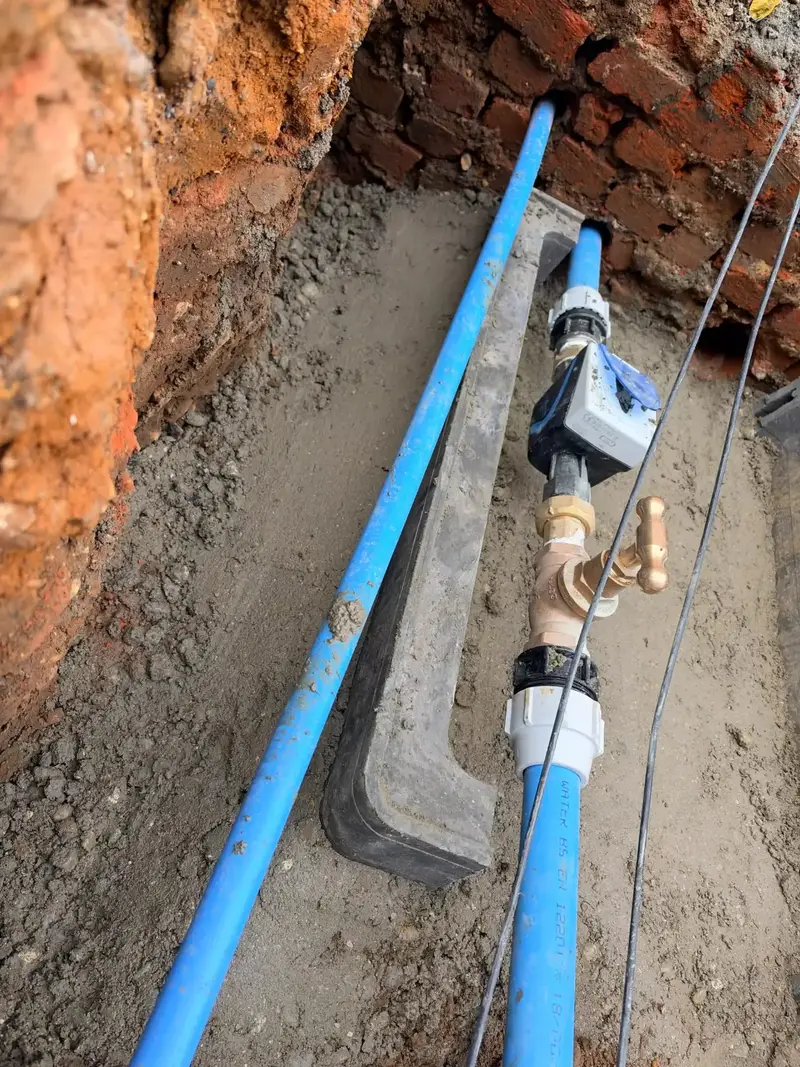
At the property end, the new supplies pass through the brickwork into the building, with a stop tap and meter fitted in line. The meter pit installations were programmed alongside the backfill on the second day, with the carriageway reinstated in tarmac on the third.
Project summary
Three supplies of three sizes were connected to a 4-inch cast iron main from a single excavation, under one permit and one road closure, in the middle of London and in full public view. The job was done in three days.
The deciding factor was not the pipework but the route: following the old lead supply is what kept the trench out of the basement beneath the road.